Namaqualand Super Bloom: The World's Most Reliable Wildflower Spectacle
Every August, a barren South African desert becomes the planet's largest wildflower garden. Here's everything you need to know about the Namaqualand super bloom — and how to witness it yourself.


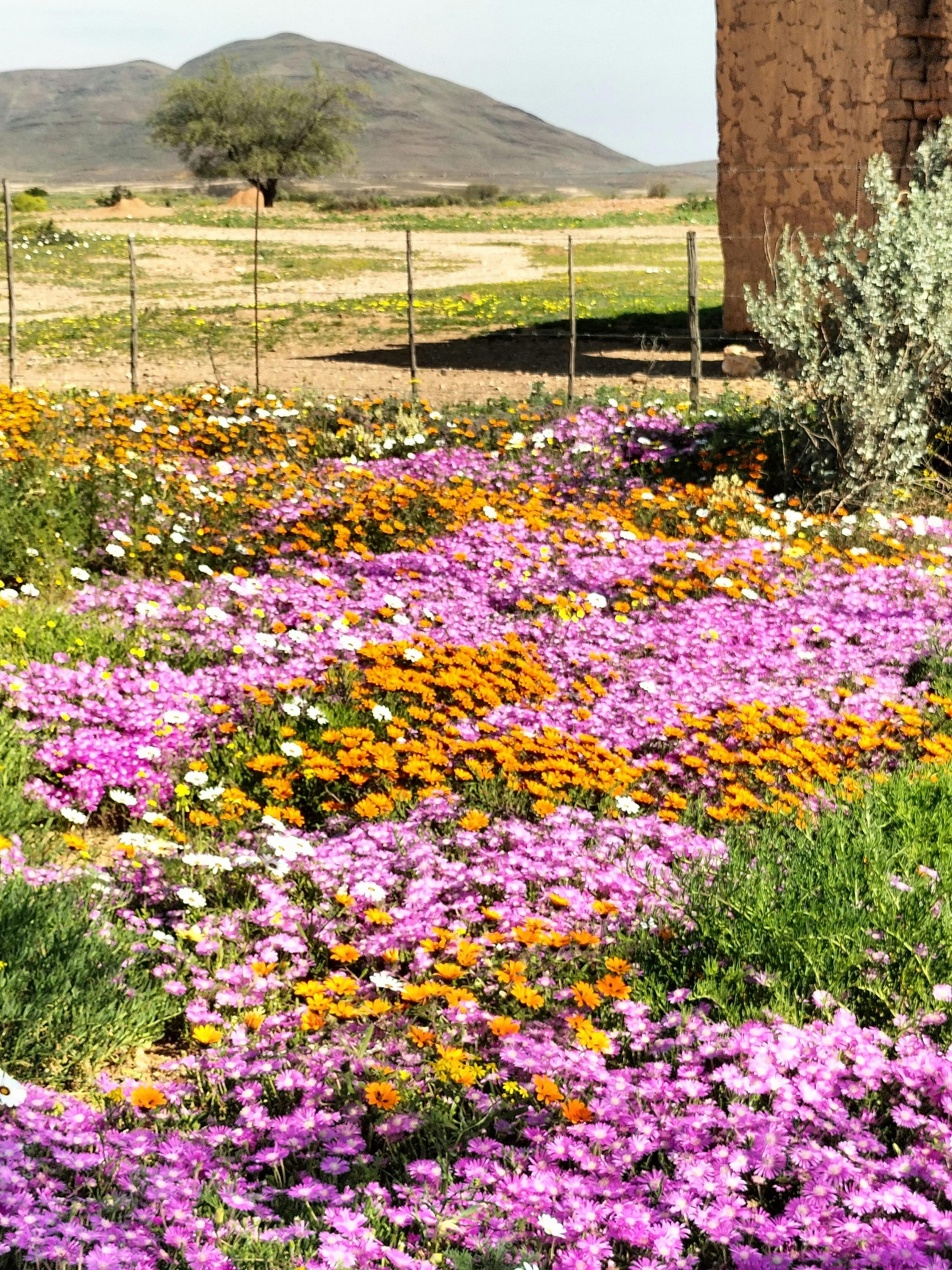
Few natural phenomena on Earth are like the Namaqualand super bloom. Every spring, a semi-desert region on South Africa's Atlantic coast transforms into a carpet of flowers.
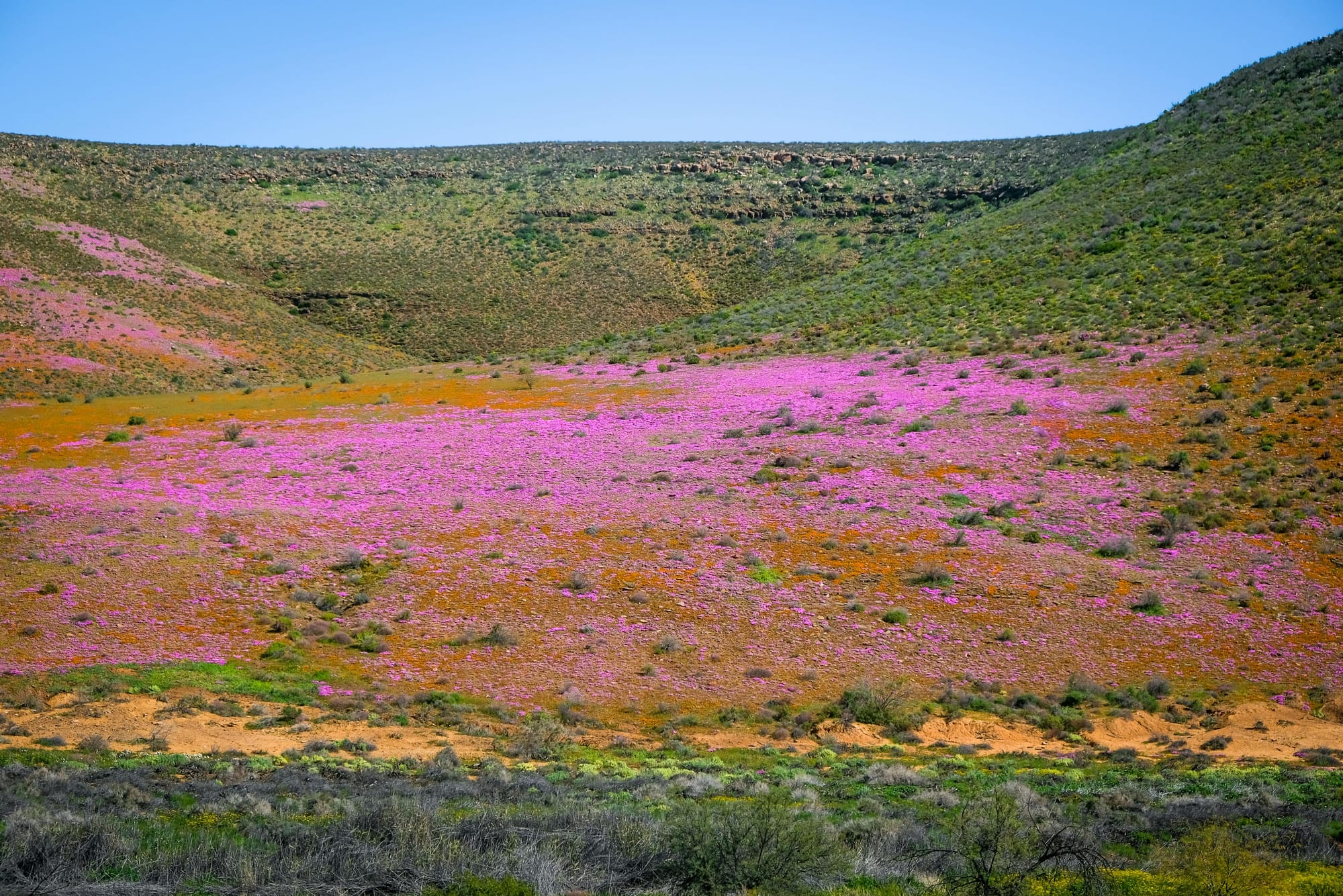
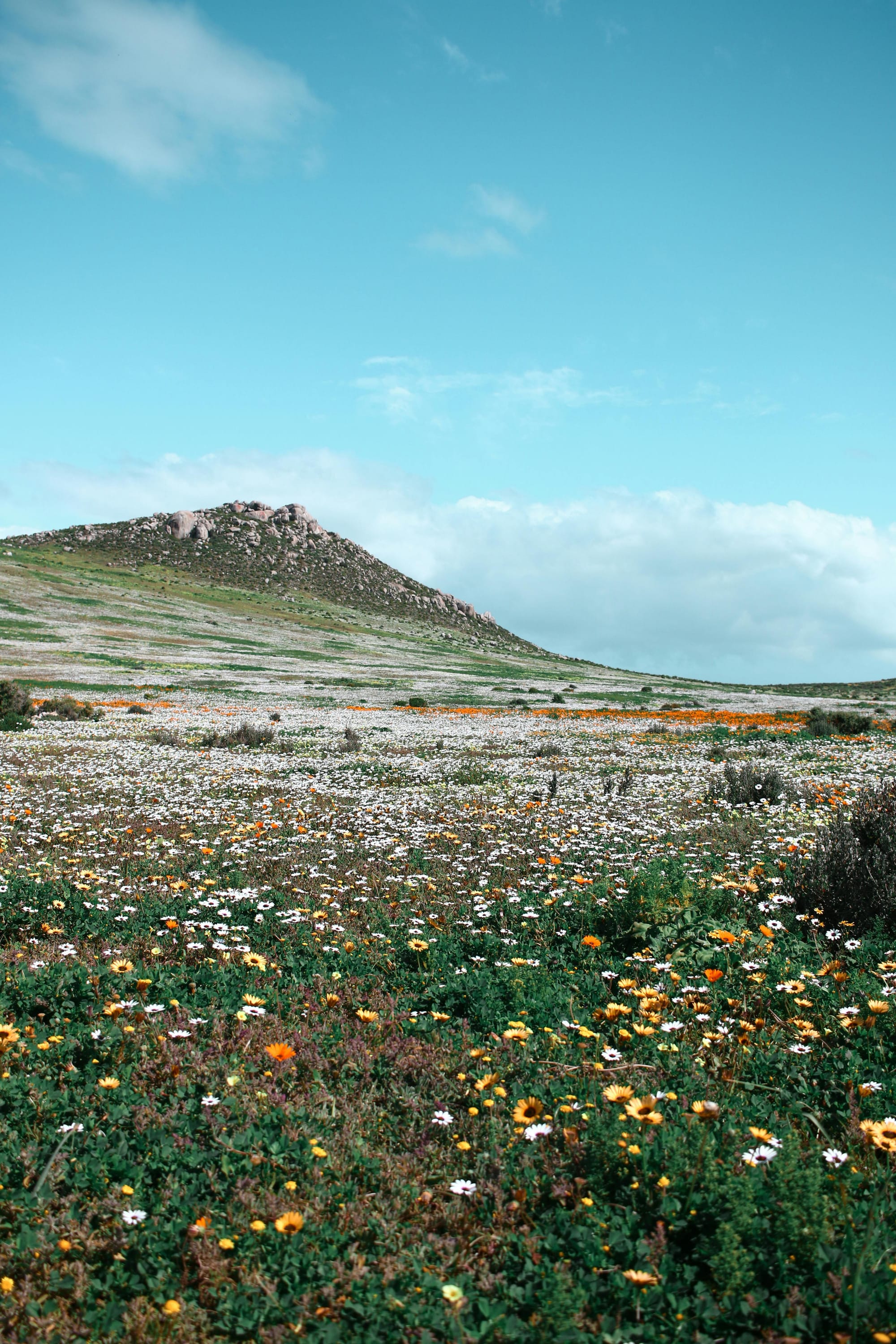
For a few weeks between August and September, the normal landscape—an expanse of bare rock and arid land—disappears beneath millions of orange, yellow, purple, and white wildflowers.

What is the Namaqualand super bloom?
The super bloom is an annual mass flowering event unique to Namaqualand, a region covering roughly 440,000 km² in South Africa's Northern Cape Province.
Unlike the rare, decade-apart super blooms of Death Valley or the Chilean Atacama, Namaqualand's bloom occurs every single year — driven by a precise ecological mechanism that has evolved over millions of years in one of the world's most botanically diverse landscapes.
The science behind it is elegant: the region receives only 150 mm of rain per year, almost entirely during winter (May to July).
Annual wildflower seeds lie dormant through the scorching summer, buried in the soil. When winter rains arrive, they germinate en masse.
As temperatures rise in August, they race to flower, pollinate, and set seed before the heat returns — producing the super bloom spectacle that visitors travel from around the world to see.
- 3,500+ Plant species in the region.
- 440,000 km² total area.
- 150 mm Annual rainfall.
- 800 km Wild Flower Route length.
Flowers you'll see
- Namaqualand daisies (Dimorphotheca sinuata) — the iconic orange carpet that defines the bloom.
- Vygies (Mesembryanthemum spp.) — vivid magenta and purple ground cover.
- Gazanias, lachenalias, and babiana — multicolored bulb species.
- Crassulas, aloes, and pelargoniums — succulents that bloom alongside annuals.
- Geissorhiza splendidissima — a stunning blue endemic found only near Nieuwoudtville.
Where is Namaqualand — and why does it bloom so reliably?
Namaqualand lies in the northwestern corner of South Africa's Northern Cape Province, stretching from the town of Vanrhynsdorp in the south to the Orange River mouth on the Namibian border in the north.
Its unofficial capital, Springbok, sits about 560 km north of Cape Town along the N7 highway. The region forms part of the Succulent Karoo biome — one of only 34 global biodiversity hotspots identified by scientists, and the only arid hotspot in the world. It harbors the highest concentration of succulent plants on the planet.
What makes the super bloom so consistent here — unlike in other desert regions — is a combination of factors: a strictly winter rainfall climate, granite soils that retain moisture efficiently, and an extraordinary seed bank built up over millennia.
The South African National Biodiversity Institute (SANBI) notes that Namaqualand is home to over 3,000 plant species, including many of the world's most beloved succulents and geophytes. This biological richness is precisely what makes the bloom so visually overwhelming: dozens of species flower simultaneously, layer upon layer.
The flowers only open in direct sunlight. On overcast days, blooms remain closed. Always check the weather forecast before heading out and plan your viewing for clear mornings, when the light — and the flowers — are at their best.
How to plan your visit to the Namaqualand super bloom
The super bloom window runs from late July through the end of September, with peak intensity typically occurring in the last two weeks of August. Exact timing shifts year to year based on winter rainfall, so monitoring local bloom reports as your trip approaches is essential.
The Namaqua National Park information office and Namaqualand Tourism publish daily bloom location updates during the season.
Getting there
- Fly into Cape Town International Airport (CPT) — the main international gateway.
- Cape Town to Namaqua National Park: ~495 km, 5–6 hours north on the N7.
- Cape Town to Nieuwoudtville (Hantam Botanical Garden): ~350 km, about 4 hours.
- A rental car is essential — no public transport connects to bloom areas.
- Main roads are paved; a 4x4 is recommended for remote sections of the park.
How long to stay
South Africa Tourism recommends a minimum of one week to properly explore the Wild Flower Route — an 800 km stretch from Cape Town to Port Nolloth on the northwest coast.
Build in one or two extra days as a buffer for overcast weather, which can temporarily close the blooms. International visitors pay approximately 110 ZAR per adult for park entrance, with contributions going directly toward conservation.
SANParks confirms that accommodation and day bookings for flower season routinely sell out more than 12 months in advance. Start planning the August after your decision — not the one before your trip.
Where to stay?
The most sustainable choice is staying inside the park itself. SANParks operates the Namaqua Flower Beach Camp (seasonal tented camp during the bloom) and Skilpad Rest Camp, both within Namaqua National Park — placing you directly inside the super bloom, with your fees funding conservation directly. For solar-powered alternatives nearby, Kallabaskop Eco Lodge (Kamieskroon) both run on renewable energy and offer authentic farm experiences.
Namaqualand beyond the bloom season
Even outside the super bloom window, Namaqualand rewards the curious traveler. The landscape reverts to its raw desert state — granite rocks, sweeping skies, a silence that feels geological.
Goegap Nature Reserve operates year-round, offering wildlife viewing (bat-eared fox, steenbok, black eagles) and 92 recorded bird species. In March and April, Nieuwoudtville's Hantam National Botanical Garden sees a secondary display of amaryllis and bulb species.
And the Northern Cape's legendary dark skies make it one of Africa's premier stargazing destinations any time of year.
As for South Africa's broader tourism seasons:
- Peak season runs from November to March (summer, beaches, Cape Town at full throttle).
- Shoulder season covers March–May and September–November.
- The low season falls in June–August.
The paradox of the super bloom is that it coincides with South Africa's national low season — meaning fewer crowds and lower prices everywhere else in the country, while Namaqualand itself operates at full capacity.
A clever traveler pairs the bloom with Cape Town bookends for the best of both worlds.
I'm so glad you made it this far. Plan V is an independent magazine, and your donation allows me to continue doing this.
See you soon.
Thank you!
FAQS
What is the best time to see the flowers in Namaqualand?
The best time is late August, with the peak super bloom typically occurring in the last two weeks of the month. The official bloom window runs from early August through the end of September. Intensity varies year to year based on winter rainfall, so check daily bloom reports from the Namaqua National Park information office.
Will there be a super bloom in Death Valley in 2026?
Yes — Death Valley experienced a significant super bloom in 2026, its strongest wildflower display since 2016. Record rainfall between November 2025 and January 2026 (nearly 2.5 inches, more than the park's typical annual total) triggered mass germination of dormant seeds.
The National Park Service officially categorized it as an "above-average bloom year." Peak viewing at low elevations occurred through mid-March 2026, with blooms continuing at higher elevations through June 2026.
What is Namaqualand very famous for?
Namaqualand is world-famous for its annual super bloom — a mass wildflower event that transforms a semi-desert into a carpet of color every August and September. Beyond the bloom, the region is renowned for harboring the world's richest concentration of succulent plants and is one of only 34 global biodiversity hotspots.
It is also home to the Hantam National Botanical Garden in Nieuwoudtville, known as the "bulb capital of the world," and the Richtersveld, a UNESCO World Heritage Site.
Where are the Namaqualand flowers located?
The Namaqualand wildflower region is located in the Northern Cape Province of South Africa, along the Atlantic coast. The main flower viewing area is Namaqua National Park, approximately 495 km north of Cape Town (a 5–6 hour drive on the N7).
The Wild Flower Route stretches roughly 800 km from Cape Town to Port Nolloth. Key stops include Skilpad Wildflower Reserve (inside Namaqua National Park), the town of Springbok, and the Hantam Botanical Garden near Nieuwoudtville.
 Pamela Herrera