The Economic Impact of Tourism: Your money stays there. Or it doesn't
Tourism generates $11.1 trillion a year globally — yet in many destinations, up to 80% of that money never reaches the local community. The data tells a more complicated story than "travel helps the economy."


Speaking of development policy issues, the economic impact of tourism is one of the most frequently cited. According to the United Nations Tourism Group, international tourist arrivals reached 1.4 billion in 2024, levels practically recovered to pre-pandemic levels.
The travel industry represents approximately 10% of global economic activity. Furthermore, tourism generates over 107 million jobs worldwide and supports the livelihoods of 248 million people globally.
While this sounds spectacular in theory, the overall figures don't reveal a structural problem that affects us all and that UN agencies have documented for decades.
A large portion of tourist spending leaks out to major international chains—airlines, hotels, imported food, booking platforms—and never circulates through local economies.

Your money stays there. Or it doesn't
It's important to mention that the economic impact of tourism on local populations depends on two factors:
- The way the industry is structured,
- and the daily decisions travelers make about where and how they spend their money.
But, contrary to what we might think, it doesn't really depend on the number of tourists who arrive at the destination.
50–80%
Average economic leakage from tourist spending in developing countries — money that exits the local economy through foreign-owned businesses and imported goods.
- UNCTAD · United Nations Conference on Trade and Development.

Tourism leakage: where your money actually goes
In the economic impact of tourism, economic leakage is the term used by UN agencies to describe tourist spending that leaves the destination's economy. This occurs when:
- Foreign-owned operators capture revenue and repatriate profits to their country of origin.
- In hotels and restaurants, imported products and food are replacing locally produced options.
- International booking platforms collect commissions that never enter the destination.
- Pre-purchased tour packages from abroad typically take travelers to self-contained resorts where everything is tailored to their needs, minimizing local spending. Furthermore, they don't get to experience the local way of life firsthand.
The UNWTO has documented capital outflows of 70% in Thailand and 80% in Caribbean countries. In contrast, a 2023 market sizing report by the Adventure Travel Trade Association revealed that 76% of spending on adventure travel stays with local providers. This is a completely different outcome from mass tourism, which is driven by the way the trip is structured.

Real examples of the economic impact of tourism on communities
Annapurna Conservation Area
Nepal
Tourism revenues are reinvested directly into community education and healthcare. UNWTO cites it as a model for SDG-aligned eco-tourism where economic impact stays local.
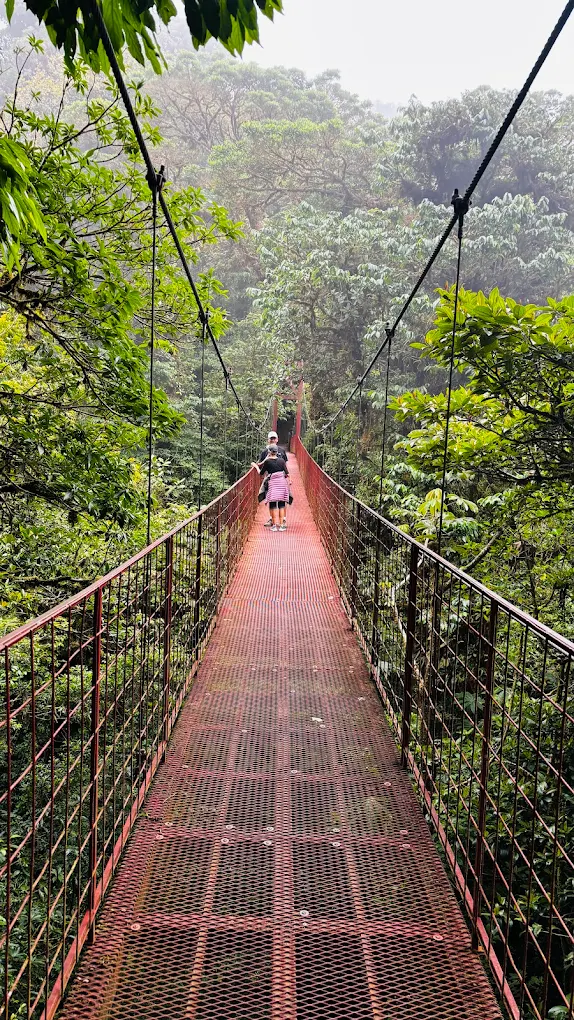
Monteverde Cloud Forest
Costa Rica
Eco-travelers buying sustainably produced local goods generate documented income for both farmers and conservation programs, per UNWTO-referenced academic research.
REST / CBT Network
Thailand
The Responsible Ecological Social Tours project channels all tour revenue through community councils, distributing income across households rather than to external operators.
5 negative economic impacts of tourism to understand
When tourism is not managed with local communities in mind, more structural damage occurs than just the capital flight reported by the ILO, UNCTAD, and UNWTO.
- Economic leakage: Between 50% and 80% of tourist spending leaves the destination country through foreign ownership and imports, according to UNCTAD.
- Price inflation: Tourism increases the cost of housing, food, and services for residents who earn local wages.
- Seasonal employment: Jobs are often temporary, informal, and concentrated in low-wage roles, creating economic vulnerability between seasons.
- Cultural commodification: With the tourism structure you're familiar with, there comes a point where cultural practices begin to be treated as tourism products managed by people outside the community. At that point, the communities lose both economic and cultural control.
- Pressure on infrastructure: Tourist demand overloads local water, sanitation, and transportation systems. These costs fall on residents, not visitors.

How travelers can change the economic impact of tourism
The decisions of individual travelers directly determine how much economic value remains in a destination. And each traveler can gradually change the course of the economic impact of tourism.
The ILO, UNWTO, and the Global Sustainable Tourism Council (GSTC) have identified specific behaviors that reduce capital flight and improve local outcomes.
Six things you can do on your next trip
- Book GSTC-certified operators: The Global Sustainable Tourism Council accredits businesses against verified social and economic standards. Search their directory at its website before confirming any booking.
- Choose locally owned accommodation: Guesthouses and family-run properties keep profits in the destination. ILO research confirms that leakage is minimal when tourism firms are locally owned. If possible, book directly with the accommodation and AVOID platforms.
- Hire local, certified guides: Direct payments to guides keep earnings in the community and support the skill-development programs ILO recommends for sustainable destination employment.
- Eat local: Every imported drink or dish contributes to the loss of imports. Choosing local food supports farmers and food producers through supply chain links, which are crucial for poverty reduction. Seasonal dishes are a great way to connect with local culture.
- Buy directly from artisan cooperatives: Purchasing from producer markets eliminates intermediary markups.
- Seek Community-Based Tourism programs: UN Tourism's CBT framework supports tourism activities designed, owned, and operated by local communities. These programs distribute income across households, not just business owners.

The scale of individual decisions is not trivial. The Adventure Travel Trade Association (ATTA) calculated that it takes four adventure travelers — ones making local, deliberate spending choices — to generate the same local economic value as 96 cruise tourists. The type of travel matters as much as the fact of traveling.
Just as supporting local communities is important, so is supporting independent journalism.
Plan V is an independent digital magazine dedicated to making your travels better experiences for both you and the destination.
Thank you for visiting; your support makes this possible.
FAQS
What is the economic impact of tourism?
The economic impact of tourism refers to the sum of direct, indirect, and induced effects that tourism spending generates in a destination's economy. This includes income from accommodation, food, transportation, and activities; job creation across industries; tax revenues for governments; and multiplier effects as tourism money circulates through local supply chains.
What do you mean by the economic impact of tourism?
When researchers and international organizations use the term "economic impact of tourism," they typically distinguish three layers: direct impact (revenue generated by tourism businesses), indirect impact (spending by those businesses on suppliers and services), and induced impact (the spending of employees whose incomes derive from tourism).
What are 5 negative impacts of tourism?
According to ILO, UNCTAD, and UNWTO research, the five most documented negative economic impacts of tourism are:
- Economic leakage.
- Price inflation.
- Precarious employment.
- Cultural displacement.
- Infrastructure strain.
What are examples of economic impacts of tourism?
Positive examples include Nepal's Annapurna Conservation Area, where tourism revenues are reinvested in local education and healthcare, and Costa Rica's Monteverde region, where eco-traveler spending supports both farmers and conservation programs.
On the negative side, a luxury resort in Bali with 55% leakage means that of every $2,000 spent, only $900 stays in Indonesia. In Caribbean nations with 80% leakage, mass tourism generates substantial gross revenue while delivering minimal net income to host communities — a disparity documented by both the UNWTO and UNCTAD.
 Pamela Herrera