Yosemite National Park Firefall 2026: Your Complete Guide to Witnessing Nature's Most Spectacular Light Show
This natural waterfall has become Yosemite's international celebrity. Every year, the phenomenon occurs when light, water, and granite align in perfect harmony.


Today, this natural Firefall has become Yosemite National Park an international celebrity. Every year, it draws crowds who celebrate the beauty that emerges when light, water, and granite align in perfect harmony.
Although initially, the reality was different.
Yosemite National Park Firefall: The Special Phenomenon
The Yosemite National Park Firefall isn't a traditional waterfall you can visit year-round. Horsetail Fall, a seasonal 2,130-foot cascade on El Capitan's eastern edge, flows only during winter months from snowmelt runoff.
The magic happens when three critical factors converge:
- Adequate water flow from winter snowpack.
- Perfectly clear western skies at sunset.
- The sun positioned at precisely the right angle to backlight the falling water.
This alignment occurs exclusively in mid-to-late February, when the setting sun illuminates only the waterfall while El Capitan's granite wall serves as a dark backdrop.
The result is an intensifying glow of orange and red hues that make the water appear to be liquid fire pouring down the cliff—hence the name "Firefall."
Only in February does the setting sun align at the precise angle needed to illuminate Horsetail Fall from behind, with the granite wall of El Capitan serving as a dark backdrop that intensifies the orange and red glow.
The effect begins approximately 5 to 15 minutes before sunset when the sun's rays narrow to illuminate only the waterfall. During these precious minutes, the water glows with intensifying shades of orange and red, resembling molten lava pouring down the cliff face.

Legacy Behind Yosemite's Firefall Phenomenon
The Firefall was named after a Yosemite tradition that began in 1872. For nearly a century, guests of the historic Glacier Point Mountain House Hotel gathered each evening to watch embers from a bonfire being thrown over the cliff edge, creating a firefall visible across Yosemite Valley. This artificial spectacle, formalized by David Curry of Camp Curry, was performed by a "fire master" every day at 9:00 PM. It soon became one of Yosemite's most popular attractions.
However, the National Park Service ended this practice on January 25, 1968. The reasons were simple: the risk of wildfires and the desire to emphasize the park's natural wonders over artificial entertainment.
Five years after, in 1973, the demise of the fake Firefall, adventure photographer Galen Rowell captured the first photograph of the natural phenomenon known as Horsetail Falls. This happened while he was driving out of the valley on Southside Drive in 1973. The image revealed a small, seasonal waterfall glowing a vibrant orange at sunset—a natural wonder that had likely existed for millennia but remained largely unknown.

Planning Your Visit: When and How to See the Firefall
Witnessing the Yosemite National Park Firefall requires careful planning and a measure of good fortune. The phenomenon is notoriously unpredictable—even slight haze or cloudiness can diminish or eliminate the effect entirely.
The 2026 Firefall viewing period is projected to run from February 10 through February 26. Sunset times during this period range from approximately 5:40 PM to 6:00 PM, with the Firefall effect beginning 5-15 minutes before sunset.
The most reliable viewing dates are typically February 14-22, when the sun's angle is optimal.
However, visitors should note that Presidents' Day weekend (February 14-16, 2026) will be exceptionally crowded, as February 16 is also a fee-free day for U.S. residents.
The busiest single day is expected to be Saturday, February 14 (Valentine's Day), followed by Friday, February 13, and Sunday, February 15.
In a significant change from previous years, no reservations will be required to enter Yosemite National Park in February 2026, specifically for Firefall viewing.
However, all visitors must pay the standard park entrance fee of $35 per vehicle (valid for seven days). This fee can be paid by credit card at park entrance gates. Visitors with an America the Beautiful Annual Pass, Senior Pass, or similar federal recreation passes will have their entrance covered.
Parking and Access Strategy
The official viewing area is located at the El Capitan Picnic Area on Northside Drive. The closest parking is at Yosemite Falls Parking Area (just west of Yosemite Valley Lodge), which requires a 1.5-mile walk each way to reach the viewing area.
If this lot is full, visitors can park at Yosemite Village or Curry Village and use the free shuttle service to reach Yosemite Falls parking or Yosemite Valley Lodge (shuttle stop #7), then walk to the viewing area.

Accommodations for Firefall Viewing
Yosemite Valley Lodge
Located directly across Northside Drive from Yosemite National Park Firefall, Yosemite Valley Lodge is the closest overnight accommodation to Horsetail Fall and the Yosemite Falls parking area.
The lodge features 245 rooms, including:
- Traditional hotel rooms.
- Bunk rooms.
- Family rooms.
- ADA-accessible options.
Winter rates for 2026 start at approximately $189 per night, with a special offer of your third night free when booking two nights (valid January 5 - March 15, 2026, with blackout dates February 13-28 during the peak Firefall period).
The Ahwahnee
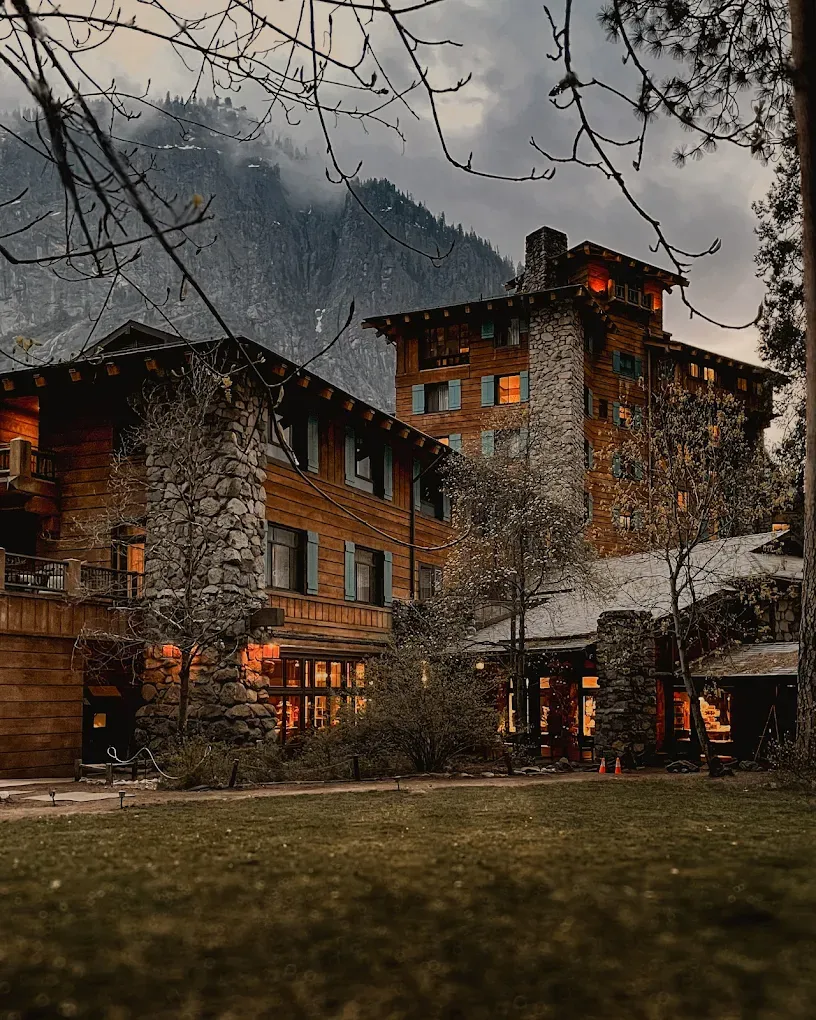
The Ahwahnee is Yosemite's iconic luxury hotel and a National Historic Landmark. Opened in 1927, the hotel features soaring ceilings, massive stone fireplaces, hand-carved furniture, and stained-glass windows in its public spaces. The renowned Ahwahnee Dining Room offers fine dining in an extraordinary setting. Guest rooms and suites capture the property's historic elegance. Winter rates start at approximately $366 per night, with a third night free offer available (same dates and restrictions as Valley Lodge). The property has a Yosemite Valley Shuttle stop for easy transportation to Firefall viewing areas.
Contact: The Ahwahnee or call (888) 413-8869.
Protecting Yosemite During Your Visit
Yosemite National Park officials urge all visitors to help protect fragile ecosystems during the Firefall event. Stay out of meadows, which support the majority of plant and animal species yet are easily disturbed by foot traffic.
When necessary to go off-trail at viewing areas, gather in areas under forest canopy with little ground vegetation. Stay in already-disturbed areas, as compacted soils prevent plant root growth.
Several viewing restrictions are in effect to protect sensitive resources. Parking, stopping, and unloading passengers is prohibited on Northside Drive between Lower Yosemite Fall and El Capitan Crossover (except for disability placard vehicles).
On Southside Drive, the same restrictions apply between El Capitan Crossover and Swinging Bridge Picnic Area. The area between Southside Drive and the Merced River is completely closed from Cathedral Beach to Sentinel Beach Picnic Area due to previous environmental damage from overcrowding.

I'm so glad you made it this far. Plan V is an independent magazine, and your donation allows me to continue doing this.
See you soon.
Thank you!
FAQS
When can you see Firefall in Yosemite?
The Firefall can be seen during a brief window in mid-to-late February each year, typically from February 10-26. The best viewing dates are usually February 14-22, when the sun's angle is optimal.The phenomenon occurs approximately 5-15 minutes before sunset, which falls between 5:40 PM and 6:00 PM during this period in 2026.
However, the Firefall is visible only when three conditions align:
- Adequate water flow from winter snowmelt.
- Perfectly clear western skies.
- Precise sun positioning.
Even slight haze or cloudiness can eliminate the effect, making each viewing unpredictable and special.
What is the Firefall phenomenon in Yosemite?
The Yosemite National Park Firefall is a natural optical phenomenon that occurs when the setting sun backlights Horsetail Fall, a seasonal waterfall on the eastern edge of El Capitan. When conditions are perfect, the sun's rays illuminate only the falling water while El Capitan's granite wall remains in shadow, creating an intensifying glow of orange and red hues that make the water appear to be molten lava or liquid fire cascading down the 2,130-foot cliff.
When did they stop the firefall in Yosemite?
The National Park Service ended the historic man-made Firefall on January 25, 1968, after nearly a century of nightly performances. This decision came after years of growing concerns about wildfire risk and the Park Service's evolving philosophy that national parks should emphasize natural wonders rather than artificial entertainment.
What happened during Firefall?
During the historic man-made Firefall (1872-1968), guests at Glacier Point Mountain House Hotel and later visitors throughout Yosemite Valley would gather each evening to watch a spectacular show. A large bonfire was built at the edge of Glacier Point, 3,000 feet above the valley floor.
The natural phenomenon involves an alignment:
- Adequate water flow from winter snowmelt.
- Perfectly clear western skies.
- Precise sun positioning.
This creates an optical effect that resembles the waterfall in flames, that's why we call it Firefall.
 Pamela Herrera