Welcome to Canada's Hot Springs Paradise
Experience Canada's most environmentally responsible hot springs destinations where thermal relaxation meets ecological stewardship.

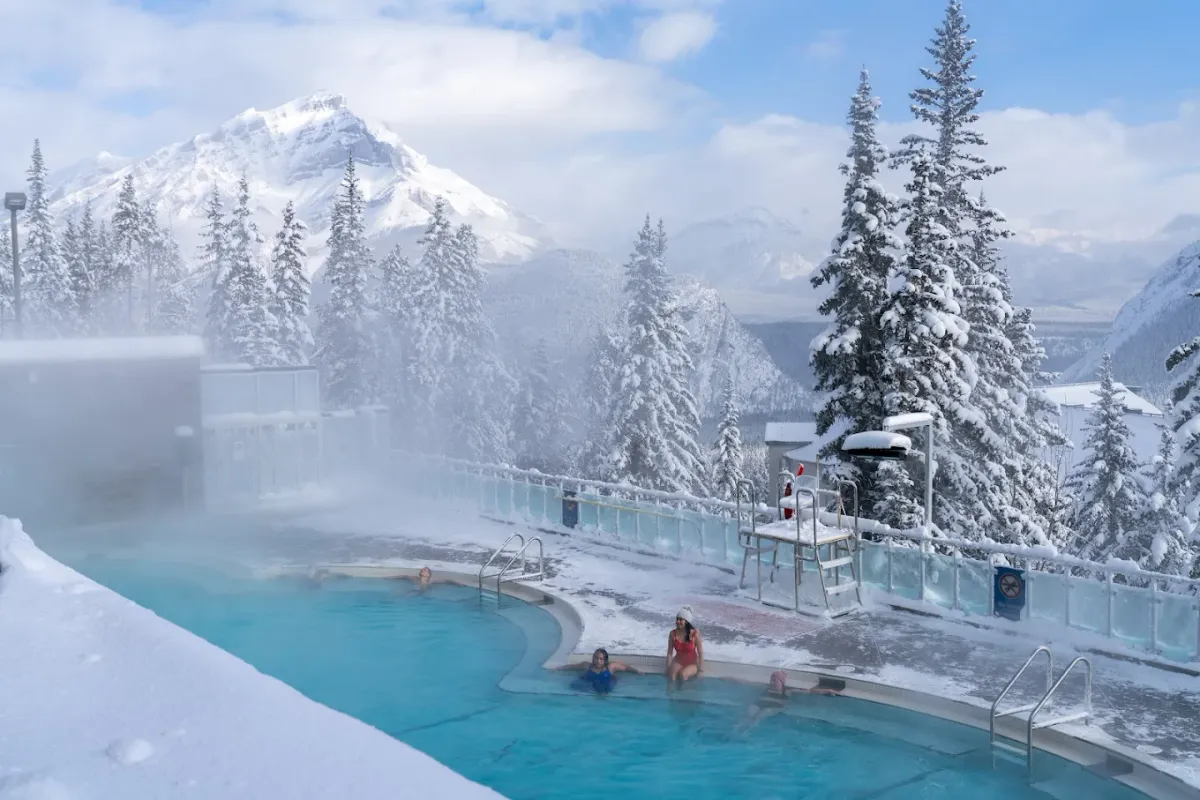
It's time to talk about the hot springs in Canada. Those that are the contrast between cold mountain air and hot mineral water. These enhance circulation, stimulate the immune system, and provide greater muscle relaxation than summer soaking.
Combining visits to hot springs with low-impact winter activities, such as snowshoeing, cross-country skiing, and winter hiking, allows you to reduce your environmental footprint to a minimum.
The natural contrast of soaking in steaming 40°C mineral water while snow falls around you and covers the surrounding Monashee Mountains, creating a dramatic temperature differential of up to 50°C, is stunning!
Winter (excluding holidays) sees lighter visitation, reducing pressure on facilities and allowing natural ecosystems to recover. Lower visitor numbers mean more intimate experiences and reduced resource consumption.
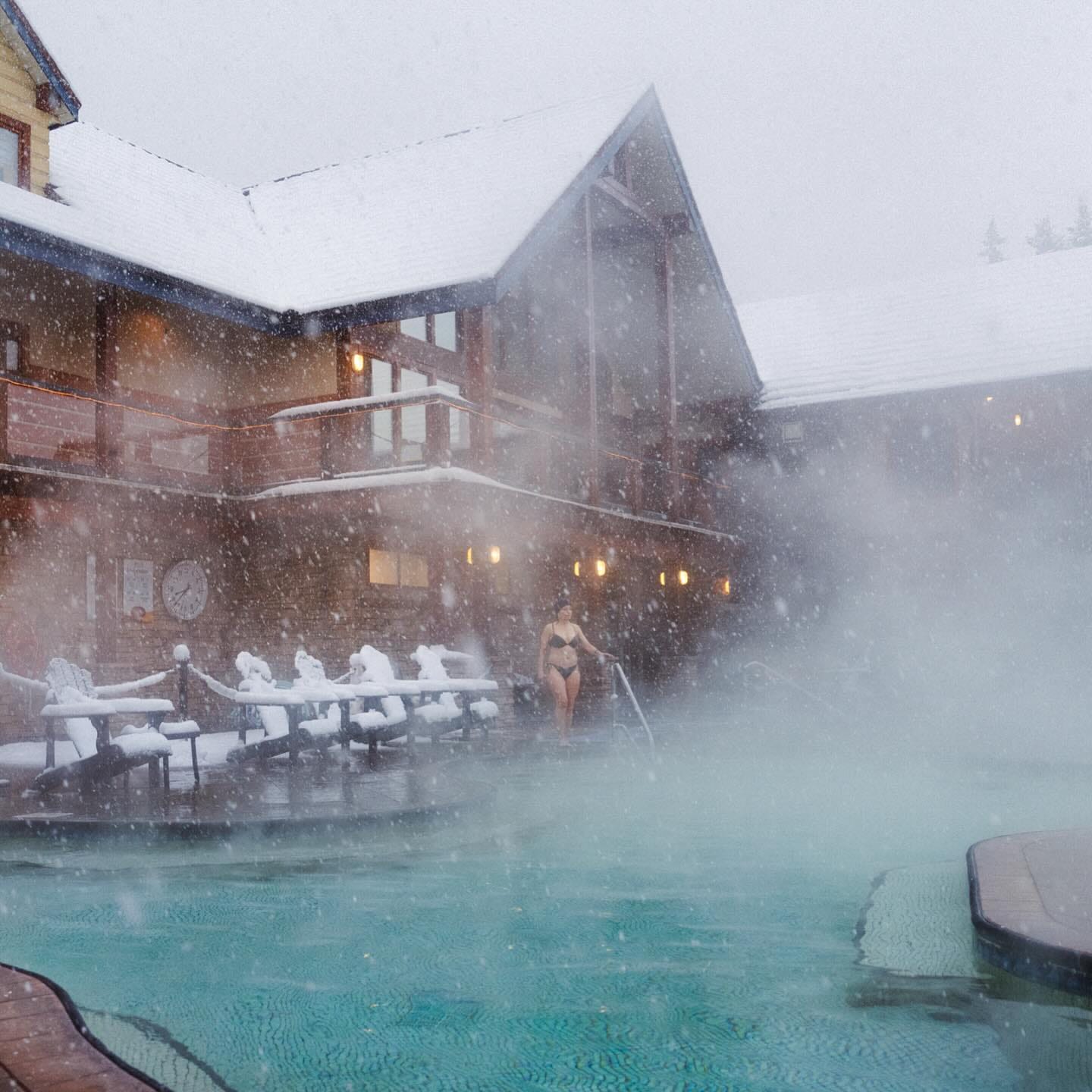
Hot Springs in Canada
Halcyon Hot Springs Resort
The Halcony hot springs in Canada form deep within Upper Arrow Lake, approximately three kilometers below the surface. Rainwater and snowmelt seep through fractures in the Earth's crust created during mountain formation. As the water descends, it encounters the geothermal gradient, which increases by about 30°C per kilometer of depth.
At the base of the mountains, water is heated by the Earth's heat and the radioactive decay of minerals. This hot water accumulates in a massive aquifer at temperatures between 90 and 95 °C. The pressurized hot water then rises to the surface through natural faults and fractures.
The hot springs of Halcyon, originating from a complex geological system, are known for emerging at 48-50°C and are rich in beneficial minerals such as calcium, sodium, lithium, and sulfur. Their high lithium content—six times higher than that of any other spring in North America—gives them historical significance. Indigenous peoples called them exceptional medicinal waters. So much so that, in ancient times, they were bottled and transported as far as London, England, for their therapeutic properties.
Halcyon Hot Springs offers you four different pools:
- Hot Pool: 40°C (104°F).
- Warm Pool: 38°C (100°F).
- Mineral Pool: 32°C (90°F).
- Cold Plunge: 14°C (58°F).
These hot springs in Canada are also concerned about environmental conservation. Although they do not have sustainable certifications, they carry out several practices:
- Geothermal Heating System: The entire lodge is heated using natural hot springs water—a closed-loop system that captures thermal energy from the Earth.
- Farm-to-Table & Local Sourcing: Halcyon maintains productive gardens and a greenhouse that supply fresh produce directly to their restaurant.
- Waste Reduction & Water Conservation: Fresh hot springs water constantly replenishes pools, maintaining natural mineral composition while meeting health standards with minimal chemical intervention.
Admission Fees
- Individual Day Pass: $15 CAD + tax.
- Family Pass: $40 CAD + tax (2 adults + 2 children under 12).
- Complimentary access with spa treatments or overnight accommodations.
Note: Bring your own towel and reusable water bottle.
Reservations
- Accommodations require a 2-night minimum Friday-Saturday.
- Limited day-pass capacity available.
- Contact: 250-265-3554 | info@halcyon-hotsprings.com
- Email: reservations@halcyon-hotsprings.com
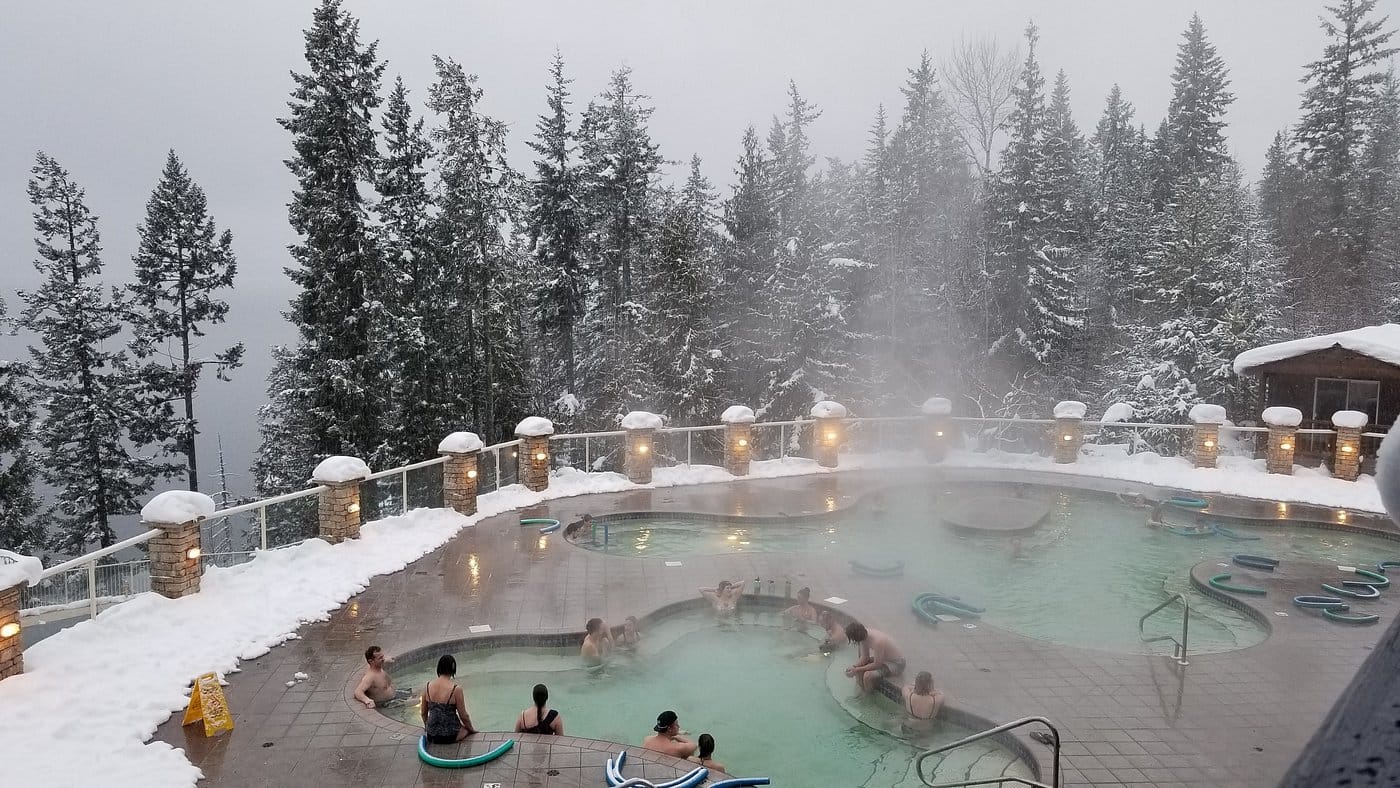
Parks Canada Hot Springs (Banff, Miette, Radium)
All Parks Canada hot spring facilities adhere to federal environmental standards and contribute to national conservation goals.
Parks Canada operates under strict ecological integrity guidelines, ensuring that hot spring operations protect the surrounding ecosystems while providing visitors with enriching experiences.
Hot springs in Canada facilities are designed and operated to maintain wildlife corridors, protect species at risk, and preserve natural habitats within national parks.
Scientific monitoring tracks environmental impacts continuously.
Banff Upper Hot Springs and Miette Hot Springs are currently CLOSED for maintenance until early 2026.
Fortunately, we have another option within a National Park: Radium.
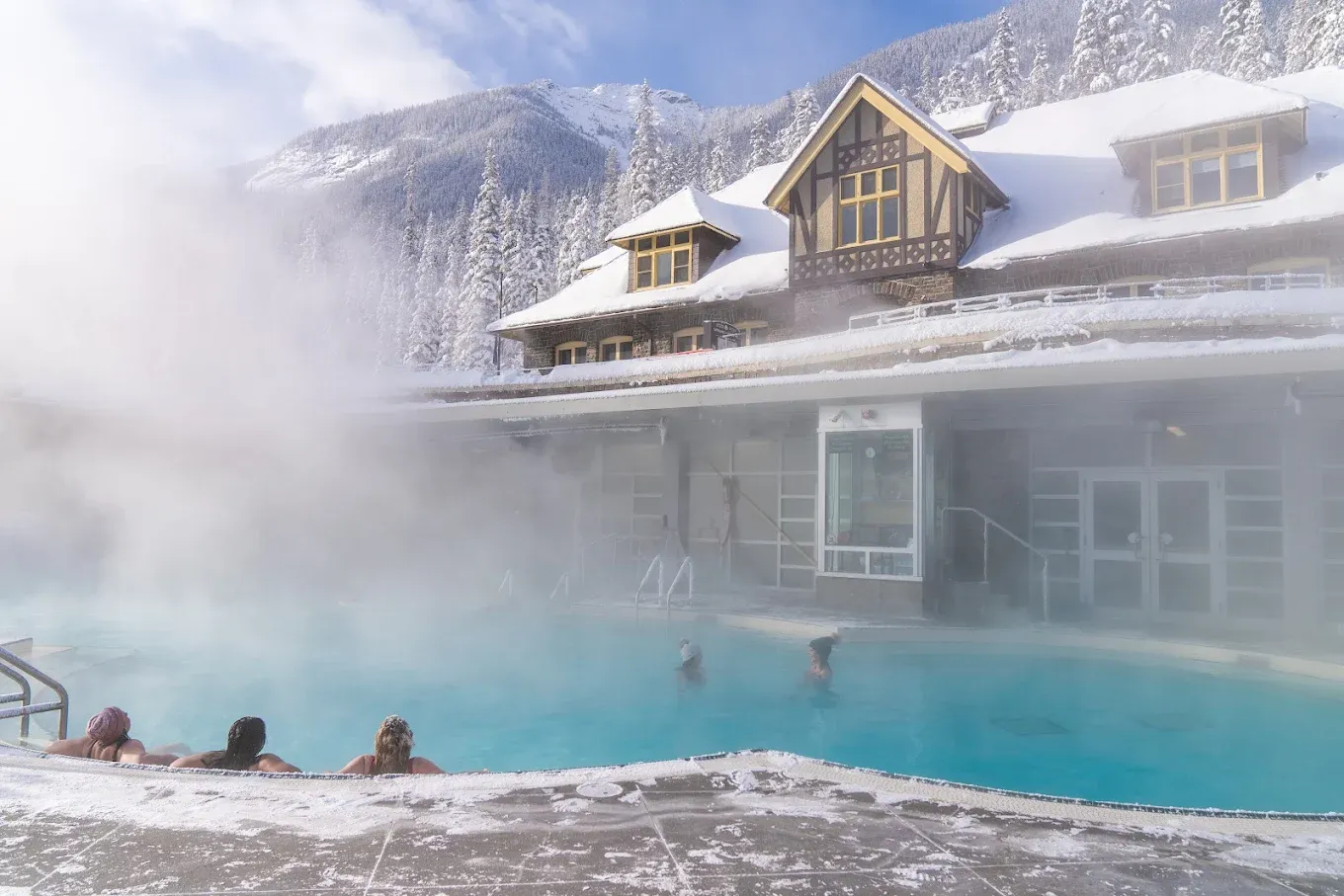
Radium Hot Springs in Canada
It is located in the 5420 Highway 93, Kootenay National Park, British Columbia (1.8 km east of Radium Hot Springs Village, Sinclair Canyon entrance).
It operates year-round, but has special winter hours.
- Monday to Friday: from 11:30 AM to 9:00 PM.
- Saturday & Sunday: 10:30 AM to 9:00 PM.
- Last entry is 8:30 PM.
Cool Pool
- Friday: 6 PM to 9 PM.
- Saturday and Sunday: 10:30 AM to 9 PM.
- Last entry is 8:30 PM.
Radium Hot Springs in Canada has over 700 milligrams of minerals per liter. The minerals included in these are: sulphate, calcium, bicarbonate, silica, and magnesium, along with trace amounts of radon.
The Radium hot pool is one of the largest hot spring pools in Canada. Its temperature ranges from 37 to 40 °C (98-104 °F), while the cold pool is about 25 meters long and its temperature ranges from 27 to 29 °C (80-84 °F).
Natural source emerges at an average of 1,700 liters per minute.
There are several differences between other thermal waters and those of Radium. These are characterized by being odorless and colorless, unlike sulfurous springs.
In addition to its prime location in Sinclair Canyon with red rock walls, frequent sightings of bighorn sheep on the canyon cliffs, and Aquacourt being listed on the Canadian Register of Historic Places.
Reservations are not required here, and prices range from CAD 15.25 to CAD 17.25, depending on the visitor's age.
Towel and swimsuit rentals are available.
Contact
- Phone: 1-800-767-1611.
- Local: (250) 347-9485.
- Website: hotsprings.ca/radium
- Email: kootenay.info@pc.gc.ca
Visitor Information
- Kootenay National Park Visitor Centre: 7556 Main Street East, Radium Hot Springs Village.
- Phone: (250) 347-9331.
- No public transit available.
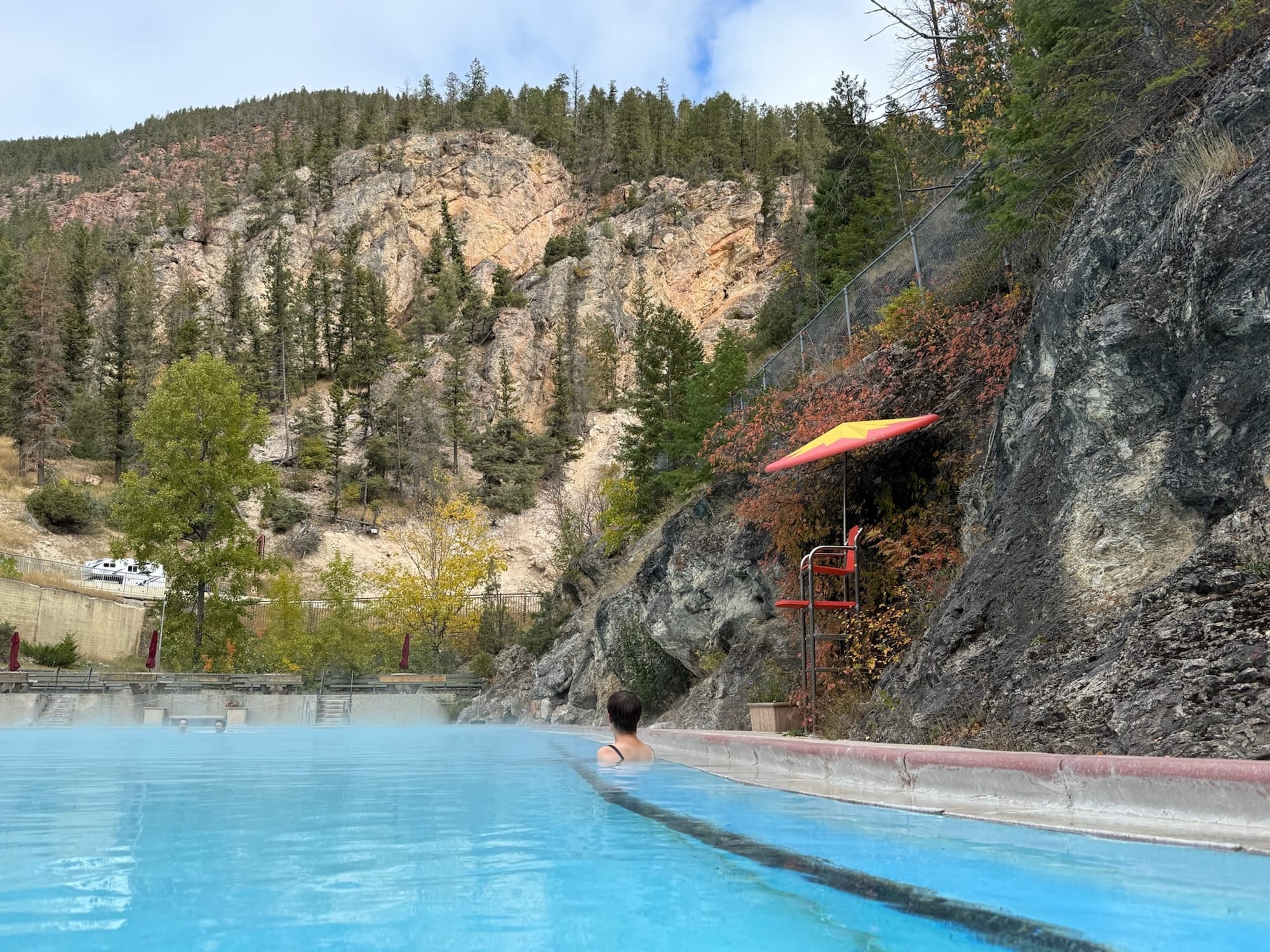
What to Bring & Eco-Conscious Recommendations
Essential Items
- Valid swimsuit (mandatory at all facilities - NO cotton underwear).
- Reusable towel (avoid rental waste; saves $2-5 CAD and reduces laundry impacts).
- Reusable water bottle (unbreakable container; no single-use plastics).
- All facilities have water fountains or refill stations.
- Staying hydrated is essential in hot springs.
- Biodegradable, reef-safe sunscreen (for shoulder season visits).
- Natural fiber flip-flops or water shoes.
- Warm layers for post-soak walks in winter (down jacket, wool layers).
- Small backpack for waste management (pack out everything).
- Cash or card for admission (no advance tickets available for Parks Canada sites).
For Winter Visits
- Insulated water bottle (prevents freezing).
- Extra warm, dry clothes for post-soak.
- Hat and gloves for walking to/from the car.
- Warm socks and boots.
- Moisturizer for dry winter air.
Health Considerations
- Consult a physician if pregnant or have heart conditions, hypertension, or diabetes.
- Avoid soaking with open wounds, sores, or recent diarrhea (48-hour wait).
- Children under 3 must wear swim diapers at all facilities.
- Limit children's soaking time to 10-15 minutes.
- Never soak while intoxicated (strictly prohibited).
I'm so glad you made it this far. Plan V is an independent magazine, and your donation allows me to continue doing this.
See you soon.
Thank you!
FAQS
How many hot springs are there in Canada?
There are numerous hot springs in Canada scattered across the country, particularly in British Columbia and the western provinces. While there's no definitive official count, estimates suggest there are well over 100 natural hot springs in Canada, with British Columbia alone having around 100+ documented geothermal springs. Many are remote and undeveloped, while others have been turned into commercial facilities.
Which is better, Banff or Radium Hot Springs?
This really depends on what you're looking for:
- Banff Upper Hot Springs offers stunning mountain views of the Rockies, a more developed facility with amenities, and easy access to the town of Banff with its restaurants and activities. BUT it's more touristy and can be crowded.
- Radium Hot Springs tends to be larger with both hot and cool pools, generally less crowded, and has a more relaxed atmosphere. The surrounding area is quieter than Banff, and the mineral content in the water is different.
If you want the full Banff experience with iconic mountain scenery and lots to do nearby, choose Banff. If you prefer a more laid-back soak with fewer crowds, Radium might be better.
Are there any natural hot springs in Canada?
Yes! Canada has many natural hot springs, though some have been developed with facilities. Some notable ones include:
- Liard River Hot Springs in British Columbia (one of the most beautiful).
- Miette Hot Springs in Jasper National Park.
- Various undeveloped springs throughout BC's backcountry.
- Hot springs in the Yukon and Northwest Territories.
How long should you soak in a hot spring?
Generally, you should limit your soak to 15-20 minutes at a time, especially if the water is very hot (above 38°C/100°F). After soaking, take a break to cool down and rehydrate. You can repeat this cycle, but listen to your body. Signs you should get out include dizziness, nausea, rapid heartbeat, or feeling overheated. Always stay hydrated and avoid alcohol before or during your soak.
 Pamela Herrera