TOP 3 Hikes You Can Do Them All Solo in Svaneti, Georgia
Welcome to a place so quiet you'll be able to hear your own thoughts as glaciers tumble down the mountain slopes.


Svaneti, Georgia's highland secret, somehow manages to feel both remote and welcoming at the same time.
The trails are well-marked but not overcrowded, guesthouses welcome solo guests like family, and the pace of life here practically forces you to slow down and savor each mountain-fresh breath. Plus, hiking season (June through October) offers the sweet spot of clear trails and comfortable weather.
Why Svaneti Should Be on Your Solo Travel Radar?
First of all, you should know that the Svan people here have never been conquered—not by the Persians, not by the Mongols, and not by anyone—and their fierce independence is evident in everything from their distinctive defensive towers (over 200 of them!) to their uniquely spiced cuisine.
Tucked away in Georgia's northwest corner on the southern slopes of the Caucasus Mountains, Svaneti, Georgia, is what happens when you let a region marinate in isolation for a few centuries.
Upper Svaneti, where we'll be focusing, sits at elevations between 1,400 and 2,200 meters and includes Mestia (your base camp) and the villages of Ushguli—one of Europe's highest permanently inhabited settlements. Four of the ten highest peaks in the Caucasus call this place home, including Mount Shkhara, Georgia's tallest at 5,201 meters.

To Start: Chalaadi Glacier
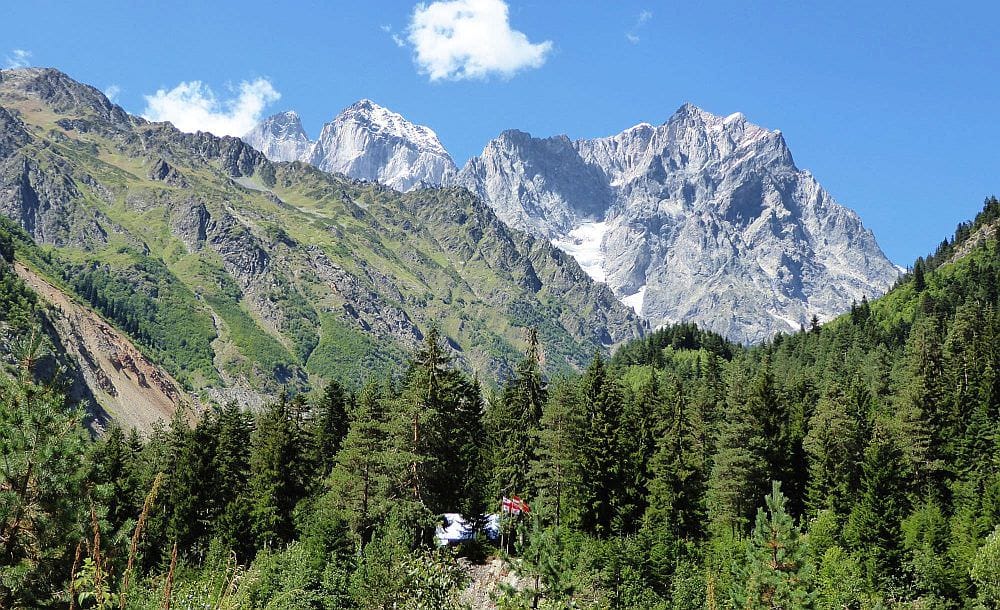
You'll start by crossing a slightly sketchy suspension bridge (it's totally safe, just adds to the adventure) before entering a gorgeous pine forest. The path is gentle and forgiving, perfect for easing into Svaneti, Georgia, rhythm. For the first 2 km, you're basically strolling through a fairytale forest with the distant rumble of glacial meltwater keeping you company.
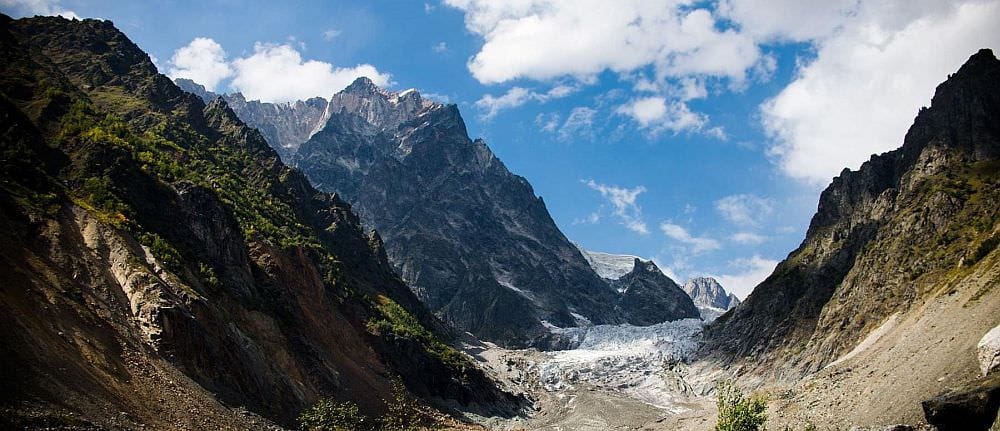
Then comes the fun part: the final kilometer gets rocky as you navigate the glacier's moraine. Think of it as nature's obstacle course—nothing technical, just big stones that'll make you glad you wore proper hiking shoes. And then, boom—there's the glacier. A massive tongue of blue-grey ice fills the gorge, with the double-peaked Mount Ushba standing guard in the background.
EXTRA TIP: STOP at that rock painted with "STOP." Seriously. Falling ice and rocks are real dangers here, and several people have been injured by getting too close.
This hike gives you a glacier experience without the multi-day commitment. It's accessible enough for beginners but rewarding enough that experienced hikers won't feel short-changed. Additionally, you'll be back in Mestia with enough daylight left to explore the town's towers and museums—or just nurse a cold beer while watching the sunset paint Mount Ushba pink.
Chalaadi Glacier route is approximately 6 kilometers long.
Getting There
From Mestia's Seti Square, you can either taxi to the trailhead (about 40 GEL for the car) or hike the full route from town. Most people opt for the taxi to skip the less scenic construction area near Mestia and start fresh at the suspension bridge trailhead.
The Details
- Difficulty: Easy (with a rocky finish).
- Distance: 3-6 km one way (depending on starting point).
- Time: 1.5-2 hours one way; 3-4 hours total door-to-door.
- Elevation Gain: 200-300 meters.
- Starting Altitude: 1,670m.
- Peak Altitude: 1,950m.
When to Go
June through October is ideal. Early season (June) means snowmelt creates powerful waterfalls, while September-October offers golden autumn colors and fewer crowds.
Sit There and Stare: Koruldi Lakes
Let's not sugarcoat it: the climb to the Mestia Cross is tough. In this of Svaneti, Georgia, you're gaining 700+ meters in about 2-2.5 hours, much of it on a steep dirt road through forest. But here's the thing—once you break above the treeline and reach that cross, the views open up like curtains at a theater, and suddenly your burning quads seem like a small price to pay.
From the cross, there's a cafe (yes, really!) where you can catch your breath with coffee and snacks. The trail to the lakes continues along a jeep track that winds up the mountainside. The landscape shifts from forest to alpine meadow, with Mount Ushba's iconic twin peaks growing larger with every turn.
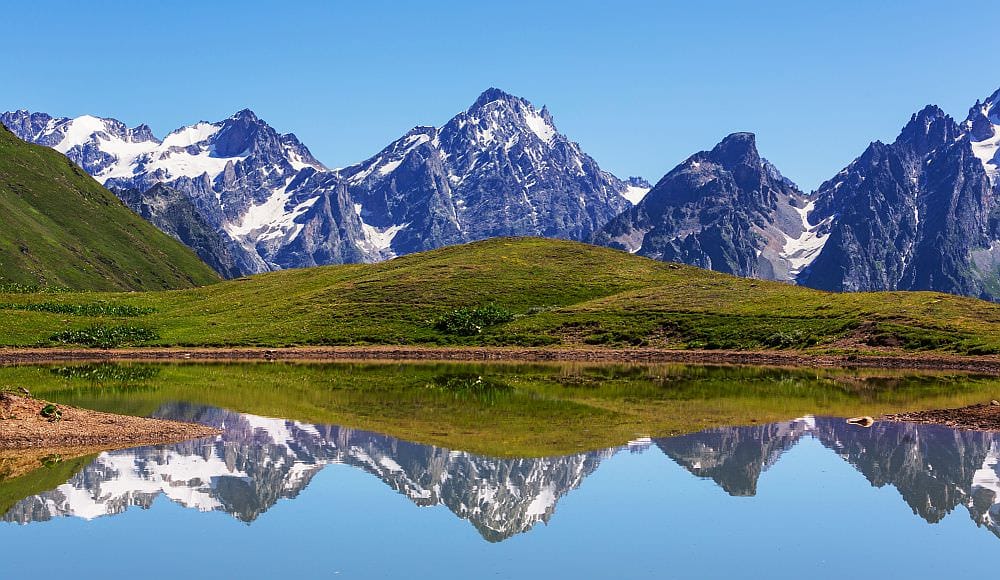
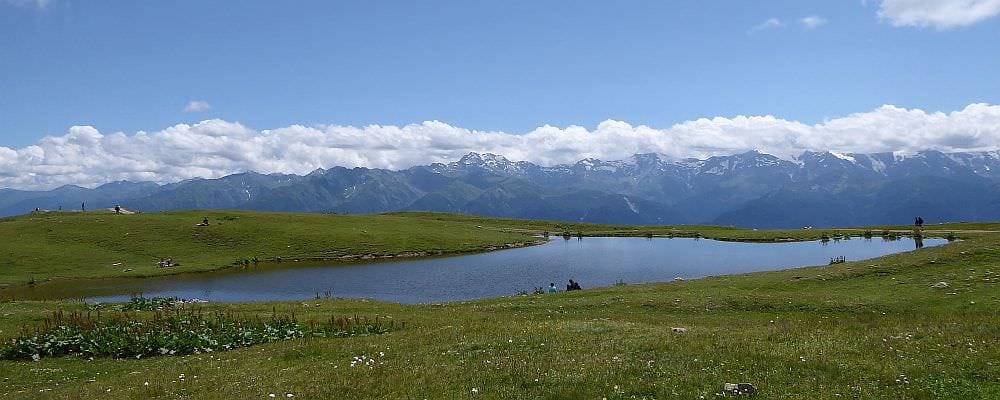
When you finally reach the Koruldi Lakes (really three small glacial pools), you're standing at 2,740 meters with a 360-degree panorama of the Greater Caucasus. Mount Ushba, Mount Tetnuldi, and half a dozen other giants surround you. It's the kind of view that makes you want to just sit there and stare.
SINCERITY: This hike earns its "hard" rating honestly, but the reward-to-effort ratio is off the charts. It's one of those trails where you'll make friends with everyone you meet along the way, united in your collective suffering on the way up and euphoria at the top. The sense of accomplishment when you reach those lakes? Unmatched.
Getting There
The trail starts from Seti Square in central Mestia. Follow the cobblestone road through Lanchvali village, passing through a Svan tower's archway (seriously cool), until the trail enters the forest. You can also take a taxi to the Mestia Cross viewpoint (100 GEL per car) to cut the steepest section.
The Details
- Difficulty: Hard (that first section is a leg-burner).
- Distance: 14 km round trip (7 km each way for the shorter route).
- Time: 7.5-10 hours total (including rest stops).
- Elevation Gain: 1,400-1,500 meters.
- Starting Altitude: 1,400m.
- Peak Altitude: 2,740m.
When to Go
July through September offers the best conditions, with July-August being prime time for wildflowers. This trail in Svaneti, Georgia, can be snow-covered outside this window, making it treacherous without proper equipment.
EXTRA TIP: Start as early as possible to beat the heat.
Walking to the Roof of Georgia: Shkhara Glacier from Ushguli
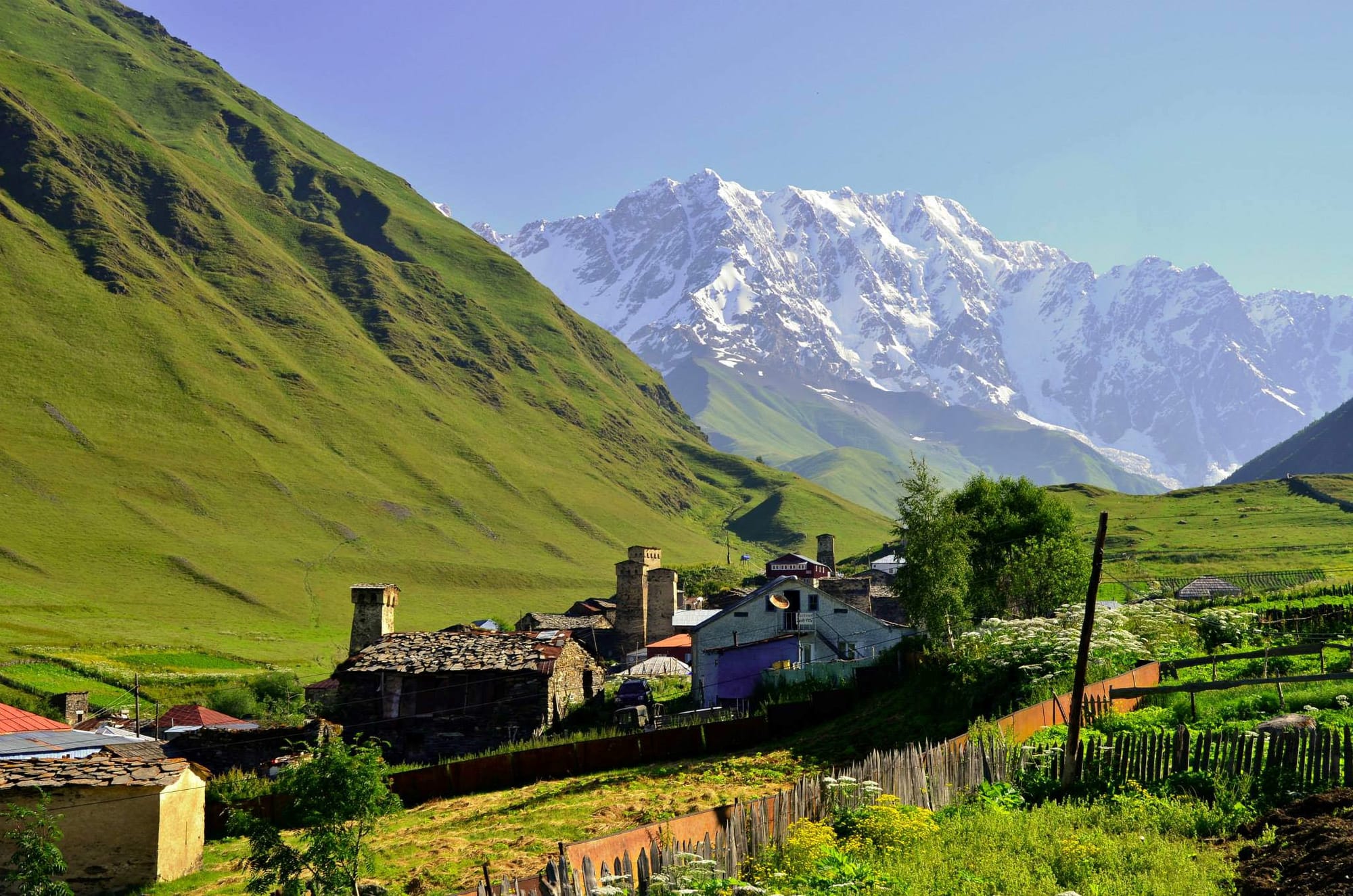
After visiting the stunning 12th-century Lamaria Church (definitely check out those ancient frescoes) in Svaneti, Georgia, the trail follows a gravel jeep road along the Enguri River valley. For the first 6 kilometers, it's wonderfully flat—you're basically just walking through one of the most beautiful valleys in the Caucasus with Mount Shkhara (5,201m) growing more massive with every step.
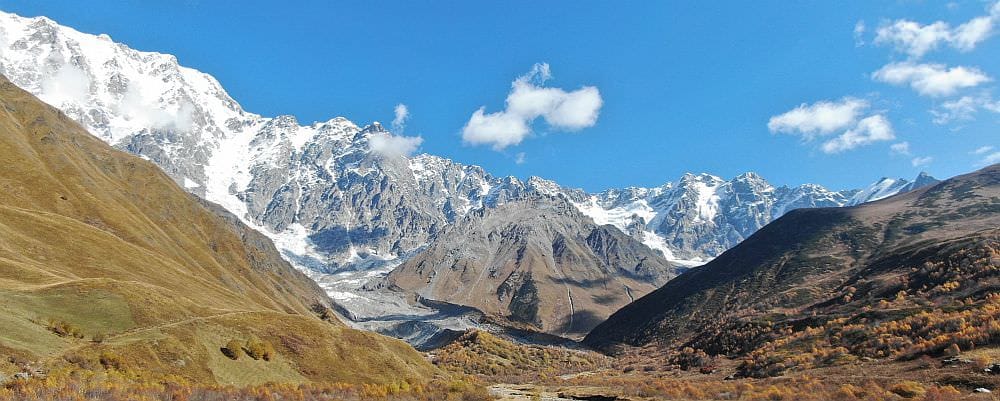
The views? Unreal. Shkhara's snow-covered bulk dominates the horizon while alpine meadows stretch out around you. You might cross a few small streams (easy hops), and there's a small restaurant about two-thirds of the way in if you need a break.
The final section climbs gradually through a small forest and across boulder fields as you approach the glacier's snout. The Enguri River starts here, born from the melting ice at Shkhara's feet. It's humbling to stand where Georgia's highest peak meets its longest river.
Advice for the laziest: The length of the hike can be significantly shortened if you take a jeep to drive you deeper into the valley.
Consider: Like with Chalaadi, keep your distance from the glacier. The ice is unstable, and rockfall is common.
Getting There
First, get yourself to Ushguli from Mestia—about 47 km on a newly paved road. Daily marshrutkas depart around 8 AM (40 GEL, 2-3 hours), or split a taxi with other travelers (200 GEL for the vehicle). The trail starts from Lamaria Church in Zhibiani, the northernmost village of Ushguli.
The Details
- Difficulty: Easy (mostly flat with gentle climbing at the end).
- Distance: 16 km round trip (8 km each way).
- Time: 5-6 hours total.
- Elevation Gain: ~200 meters.
- Starting Altitude: 2,200m.
- Peak Altitude: 2,390m.
It's perfect for solo travelers who want that "edge of the world" feeling without the stress of exposed ridges or sketchy scrambles. Plus, you're hiking from one UNESCO World Heritage village to the source of Georgia's iconic river—there's poetry in that.
When to Go
June through October, same as the other trails. June offers the most dramatic water flow in the Enguri River, while September-October provides incredible autumn colors and clearer mountain views. Both times, you’ll barely see another soul on the trail.
Fuel Your Adventures with Svaneti's Culinary Treasures
After burning thousands of calories on mountain trails, you'll be ready to dive face-first into Svaneti's, Georgia, hearty cuisine. These dishes aren't just food—they're cultural artifacts, shaped by centuries of harsh winters and the need for serious mountain fuel.
What to eat?
- Kubdari – The undisputed king of Svanetian food. A pillowy flatbread stuffed with chunks (not ground meat) of beef or pork seasoned with Svanetian salt, garlic, onions, and a mysterious local herb called "gitsruli." It's baked until the edges are crispy and the inside is juicy enough to make you weep with joy. Order it fresh from the oven—it's good cold, but hot kubdari is transcendent.
- Tashmijabi – This is what happens when you take perfectly boiled mountain potatoes and mix them with an obscene amount of melted sulguni cheese. The result is a stretchy, gooey, indulgent potato-cheese creation that defies physics. It's comfort food that sticks to your ribs for days (in the best way). Essential after a long hike.
- Chvishtari – Think cornbread meets cheese, but make it Svanetian. The local version uses green millet flour (unique to Svaneti) mixed with corn flour and sulguni cheese, then fried into golden patties. Lighter than the standard Georgian version and addictively cheesy. Perfect as a side or snack.
- Chacha – Okay, it's a drink, not food, but you can't skip Georgia's legendary grape-based moonshine. Especially after your hosts insist on a toast (or ten). It's strong (40-60% alcohol), burns gloriously going down, and is traditionally drunk to ease those heavy mountain breakfasts. Many families make their own. Approach with respect.
Where to eat?
Local guesthouses – Don't overlook your accommodation's meals. Family-run guesthouses often serve the most authentic, home-cooked versions of everything, and eating with your hosts gives you insight into Svan culture you won't get anywhere else.

Before You Go to Svaneti, Georgia: You must know
Svaneti isn't trying to be the next Chamonix or Patagonia. It's not polished or easy or even particularly comfortable. But that's exactly what makes it perfect for solo travelers who value authenticity over amenities, who'd rather share a table with locals than scroll through Instagram, and who understand that the best stories come from the roads less traveled.
I'm so glad you made it this far. Plan V is an independent magazine, and your donation allows me to continue doing this.
See you soon.
Thank you!
FAQS
What is Svaneti in Georgia?
Svaneti is a mountainous region in northwest Georgia, nestled in the Greater Caucasus Mountains. It's known for its medieval defensive stone towers (over 200 of them), stunning alpine landscapes, and the Svan people—an ethnic group that has maintained its unique culture, language, and traditions for centuries. Upper Svaneti, home to Mestia and Ushguli (one of Europe's highest inhabited villages), is a UNESCO World Heritage Site and offers some of the best hiking in the Caucasus.
How do I go from Tbilisi to Svaneti?
You've got three main options: fly directly to Mestia's small airport (about 45 minutes, seasonal flights with Vanilla Sky), take an overnight marshrutka/minibus from Didube Station in Tbilisi (10-12 hours, around 40-50 GEL), or rent a car and drive the scenic route through Zugdidi (8-10 hours with stops). Most travelers opt for the marshrutka—it's cheap, leaves daily around 8 AM, and you'll wake up in the mountains. Book a day or two ahead during summer peak season.
What are Svaneti's famous foods?
Kubdari is the star—meat-stuffed bread seasoned with local spices that you'll crave for months after leaving. Tashmijabi (stretchy cheese-potato heaven) and chvishtari (cornbread with cheese made from unique green millet flour) are also essential. Everything's flavored with Svanetian salt, a special herb blend you can't find anywhere else. Wash it down with homemade chacha (strong grape moonshine) if you're brave, and don't skip the fresh mountain honey.
What to visit in Svaneti, Georgia?
Beyond the three hiking routes mentioned above, visit Mestia's Svaneti Museum of History and Ethnography to understand the region's culture, climb one of the defensive towers for sunset views, and explore Ushguli's four ancient villages (UNESCO-listed and jaw-droppingly beautiful). The 12th-century Lamaria Church near Ushguli has incredible frescoes, and Mestia's town square is perfect for people-watching over coffee. If you're there in winter, Tetnuldi and Hatsvali ski resorts offer uncrowded powder runs with epic views.
 Pamela Herrera