The Gibbon Experience Is Redefining What Travel Can Do
Deep in Laos, the Gibbon Experience lets you zip-line to a treetop home and wake up to wild gibbons — while protecting a national park.

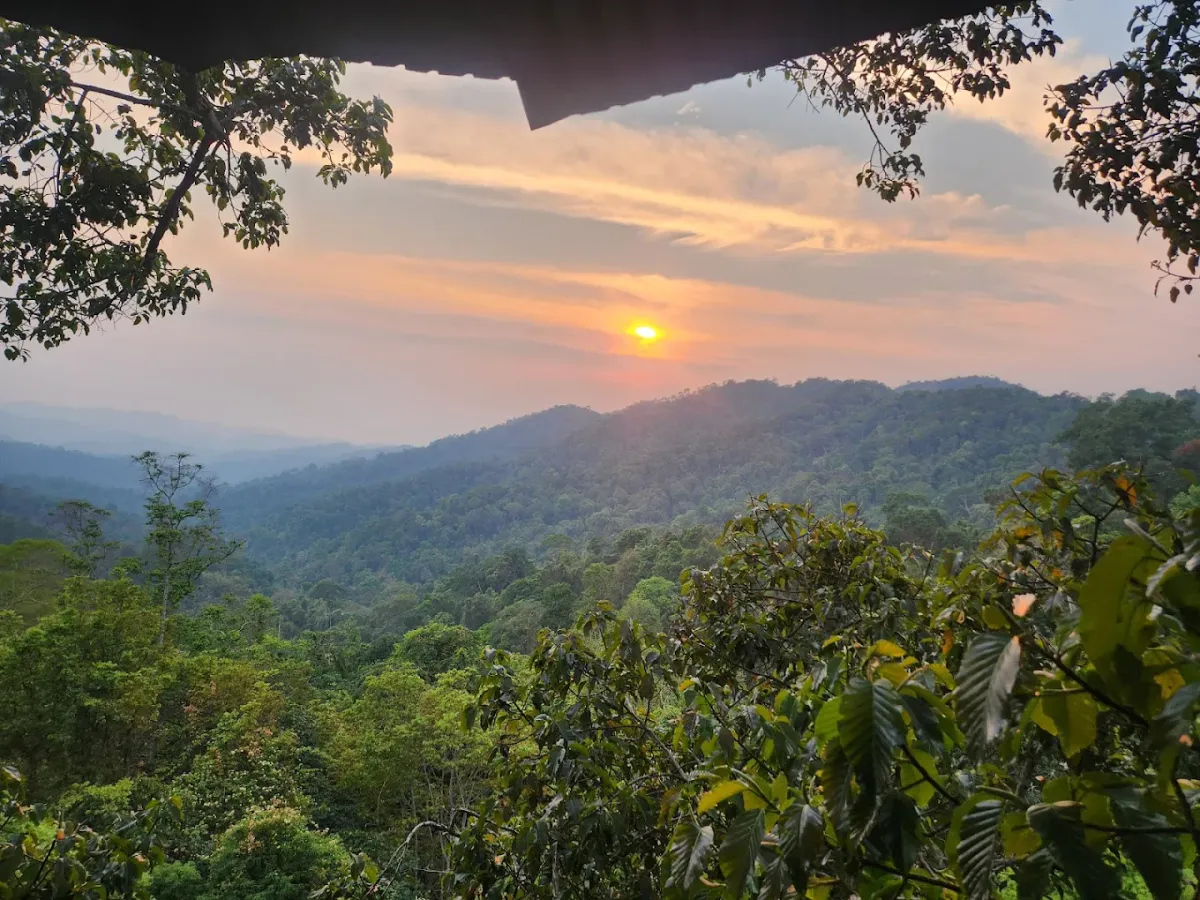
That's not a dream — that's a regular morning at the Gibbon Experience, a tourism-based conservation program nestled in the Bokeo Province of northern Laos. Born out of urgency rather than adventure, the project was founded in 1996 as a direct response to the devastating effects of illegal logging, slash-and-burn agriculture, and land pressure that were rapidly destroying the region's tropical forests.
The concept was simple but radical: use tourism to make conservation economically viable for local communities. By giving forest-dwellers a livelihood tied to the survival of the jungle, the Gibbon Experience created a powerful incentive to protect it. Today, the project employs over 80 full-time staff from surrounding communities, and hundreds more families benefit indirectly from its conservation and sustainable agriculture programs.
The results speak for themselves. In 2008 — thanks in large part to the awareness and political momentum generated by the project — the Lao National Assembly officially designated the area as Nam Kan National Park, a 136,000-hectare expanse of mixed deciduous forest that shelters some of the rarest wildlife in Southeast Asia. What started as a grassroots conservation effort has helped shape national policy.
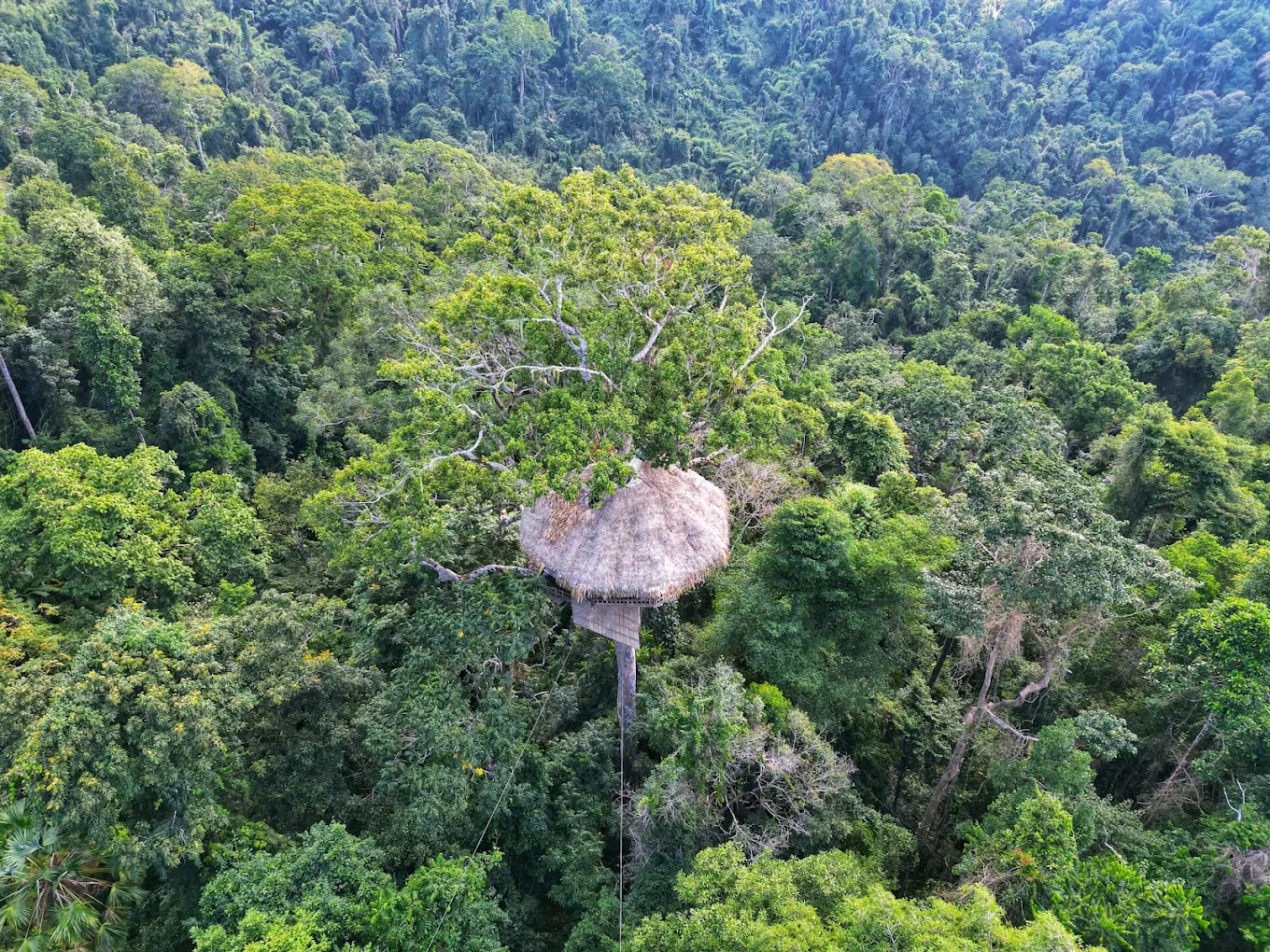
Where the Forest Meets the Sky
The Gibbon Experience is based out of Huay Xai, the capital of Bokeo Province in northwestern Laos, right on the border with Thailand.
The town sits on the banks of the Mekong River and is easily reachable by a short ferry crossing from Chiang Khong, Thailand, making it a natural gateway for travellers crossing Southeast Asia overland.
Once inside Nam Kan National Park, you enter a world that feels genuinely untouched. The park's mixed deciduous forest shelters the critically endangered Black-crested Gibbon (Nomascus concolor), tigers, bears, and countless bird and plant species rarely seen outside protected wilderness.
The park also contains what is believed to be the largest tree in all of Laos — a strangler fig of staggering proportions that the project calls the Tree King.
The project's social impact is as significant as its environmental one. Through national park patrols staffed by community members, sustainable agriculture programs, and renewable energy initiatives within the treehouses, the Gibbon Experience demonstrates that protecting nature and improving livelihoods are not opposing goals — they are, in fact, the same goal.
More Than Tourism — A Model for Conservation
At its core, the Gibbon Experience aims to preserve the biodiversity of Nam Kan National Park by funding anti-poaching patrols led by community members, on the principle that the people who live closest to the forest are its most effective guardians.
It also supports sustainable agriculture to reduce dependence on slash-and-burn practices, and has installed renewable energy systems across its treehouse network.
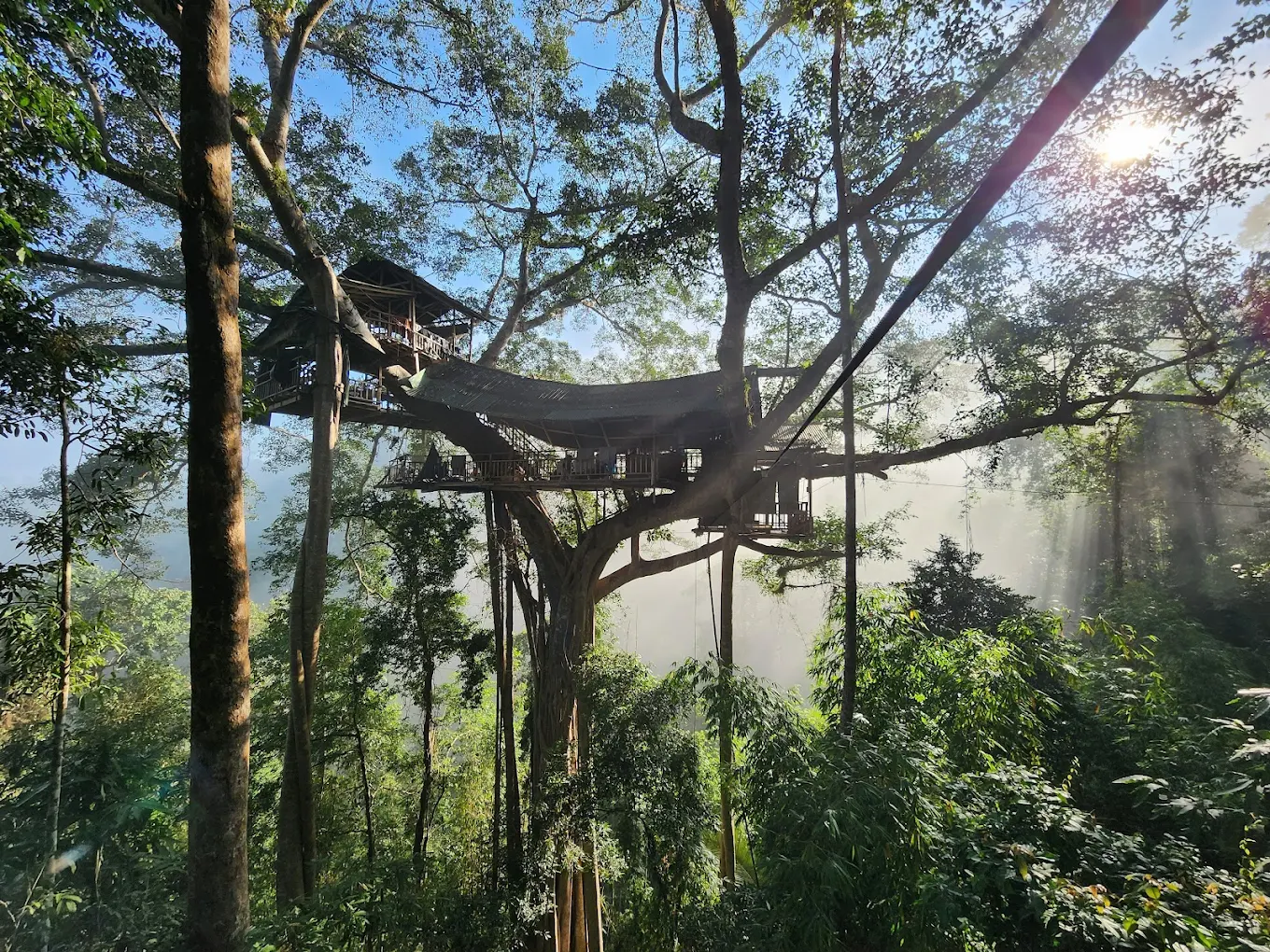
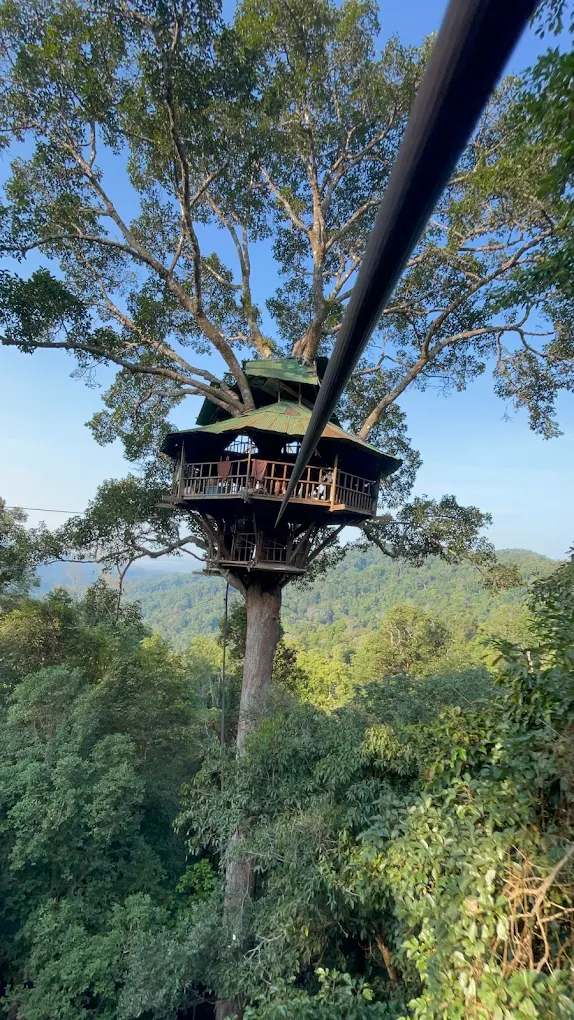
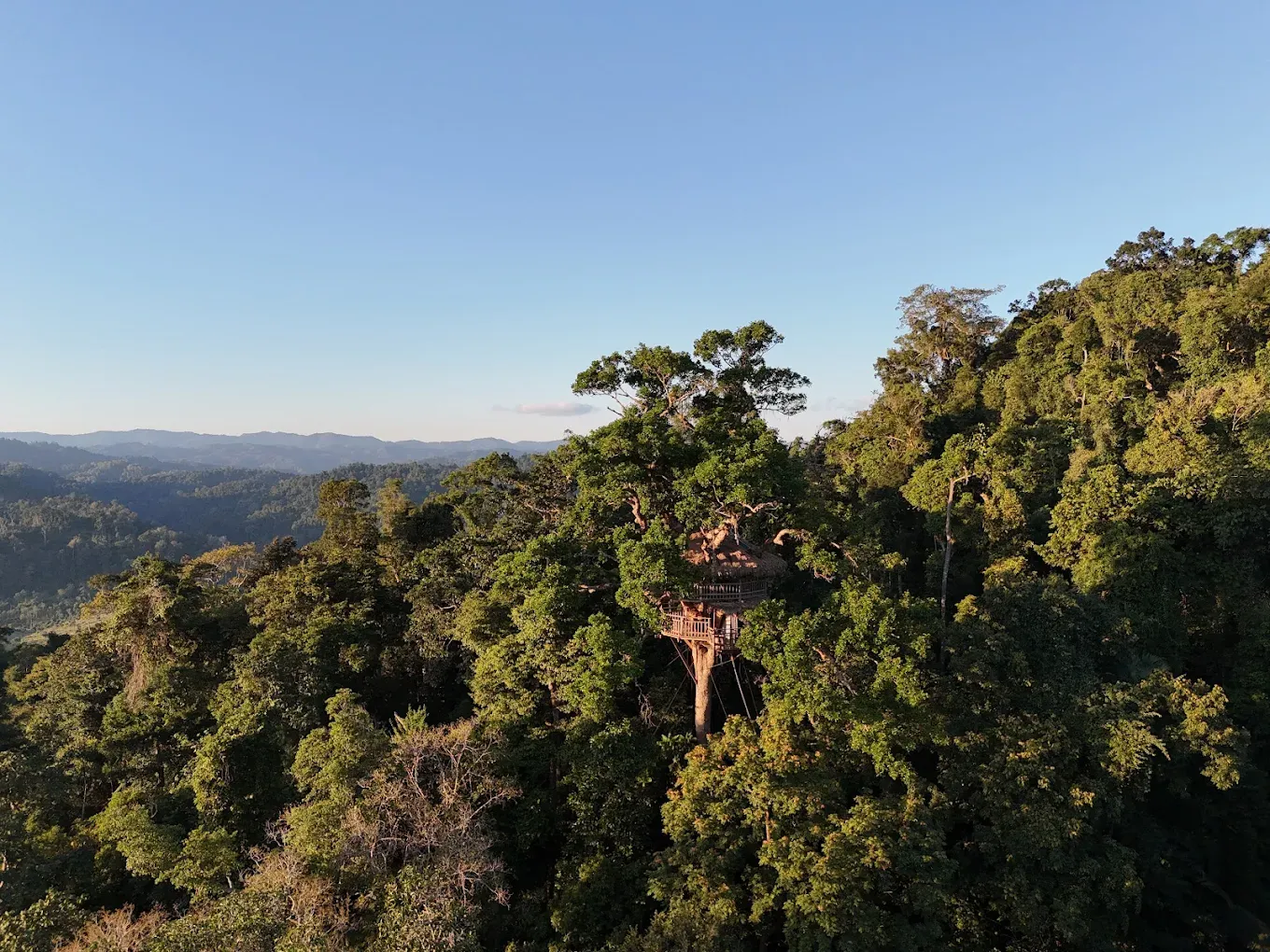
But what it's most famous for is its architecture. The treehouses at the Gibbon Experience are the highest in the world — some perched over 40 meters above the forest floor, accessible only by zipline.
These are not rustic platforms; they are beautifully handcrafted structures built directly into the crowns of ancient trees.
Reaching your room via a zipline at sunset, with the jungle canopy stretching in every direction, is by all accounts one of the most extraordinary travel moments in Southeast Asia.
Four Ways to Enter the Canopy
All tours depart from the Gibbon Experience office in Huay Xai at approximately 8 a.m. and include trekking, ziplining, nights in treehouses, and meals prepared by local guides. By visiting, you directly fund park patrols, community employment, and forest conservation.
Classic Tour
The best option to spot gibbons. An easy 1–2 hour trek with a flexible schedule. Guides accompany you for trekking and ziplining throughout the park.
- 3 days · 2 nights · Ages 8–65.
Giant Loop
The ultimate airborne experience. Long ziplines, mountain-to-mountain crossings, and a night beside the Tree King — the largest tree in Laos.
- 2 days · 1 night · Ages 10–60.
Escape Tour
The Classic is packed into a single overnight. Fast-paced, ~8 km/day of trekking, great wildlife spotting at dawn. Maximum 6 guests.
- 2 days · 1 night · High Fitness Required.
Honeymoon Tour
A private handcrafted treehouse for two. Flexible schedule, same area as the Classic, and the intimacy of your own jungle hideaway.
- 3 days · 2 nights · 2 People Only.
The Gibbon Experience is ideal for curious, physically active travellers who value authentic, meaningful adventures. It's a great fit for solo explorers, couples, small groups, and families with older children — particularly those with a passion for wildlife, conservation, or simply the desire to sleep at the top of the world.
Getting Into Laos: What You Need to Know
Laos is generally straightforward to visit, but entry requirements vary by nationality. Here's a quick overview:
- Visa on Arrival: Most nationalities — including travellers from the USA, EU, UK, Australia, and Canada — can obtain a visa on arrival at major border crossings and international airports. It's typically valid for 30 days and costs approximately $30–$50 USD.
- Visa-Free Entry: Citizens of ASEAN member states (Thailand, Vietnam, Malaysia, etc.) and a handful of other countries may enter without a visa for stays of up to 30 days.
- E-Visa: Laos offers an e-visa option for eligible nationalities, which can be obtained online before travel — recommended if you prefer to arrive with everything ready.
- Health Requirements: No mandatory vaccinations are required to enter Laos. However, Hepatitis A, Typhoid, and Tetanus are commonly recommended, and malaria prophylaxis is advisable for forested areas like Bokeo Province. Yellow Fever vaccination is required only if arriving from a country with transmission risk.
For official, up-to-date information based on your country of origin, visit the Lao PDR immigration portal: immigration.gov.la
I'm so glad you made it this far. Plan V is an independent magazine, and your donation allows me to continue doing this.
See you soon.
Thank you!
FAQS
Is the Gibbon Experience worth it?
By most accounts, absolutely — and the evidence is hard to argue with. National Geographic, CNN, The Washington Post, and The Guardian have all highlighted it as one of the most extraordinary experiences in Southeast Asia.
But beyond the adventure factor, what makes it genuinely worthwhile is its purpose: every visit directly funds anti-poaching patrols, local employment, and the conservation of Nam Kan National Park. You sleep in the world's highest treehouses, arrive by zipline, and wake up to wild gibbons calling through the canopy. For the right kind of traveler — active, curious, and conservation-minded — the answer is a resounding yes.
What is the Gibbon Experience?
It's a tourism-based conservation program located in Bokeo Province, northern Laos. Founded in 1996, it combines ecotourism with real social impact: it operates within Nam Kan National Park (136,000 hectares), employs over 80 people from local communities, and offers visitors the chance to stay in the world's highest treehouses, connected by long-distance ziplines deep in the jungle. Its core mission is to prove that protecting the forest and improving the livelihoods of those who live in it are not opposing goals — they are, in fact, the same goal.
How long is the Gibbon Experience?
It depends on which tour you choose. Options range from 2 to 3 days:
- Giant Loop & Escape Tour — 2 days, 1 night
- Classic Tour & Honeymoon Tour — 3 days, 2 nights
All tours depart from the Huay Xai office around 8 a.m. and return between 3 and 4 p.m. on the last day. If you'd like to stay longer, the Honeymoon Tour allows extended stays upon direct request.
What are the disadvantages of tour packages?
This is a general travel industry question, not specific to the Gibbon Experience. That said, the most common drawbacks are worth knowing. The biggest one is lack of flexibility — packages follow fixed itineraries that don't always adapt to your pace or interests in the moment. They also tend to bundle services you may not need, and in heavily touristed destinations, large groups can strip away the sense of authenticity you were looking for in the first place.
Another key issue is operator dependency: if something goes wrong — cancellations, weather changes, logistics failures — you're subject to their policies rather than your own judgment. And in some cases, low-cost packages route money through intermediaries rather than directly to local communities. That last point, notably, does not apply to the Gibbon Experience, which is specifically designed so that tourism revenue flows directly to the park and its workers.
 Pamela Herrera