A Journey into the Heart of Uganda's Ancient Rainforest: Bwindi Impenetrable Forest
Bwindi Impenetrable Park is not just a destination—it's a pilgrimage into one of Africa's most ancient ecosystems.


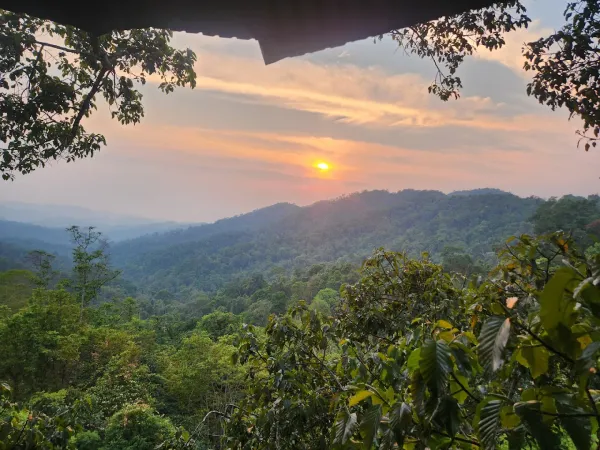
Bwindi Impenetrable Park is a primeval forest, located in southwestern Uganda along the edge of the Albertine Rift, and contains around 160 tree species and over 100 fern species, having evolved over 25,000 years into one of the continent's most biodiverse sanctuaries.
Bwindi is home to half the world's remaining population of critically endangered mountain gorillas, making it the premier destination for gorilla trekking globally. But beyond the gorillas, this UNESCO World Heritage Site offers something increasingly rare: authenticity.
The Batwa people, indigenous hunter-gatherers who lived in these forests for millennia before being displaced when Bwindi became a national park in 1992, now share their ancestral knowledge through immersive cultural experiences.
The most important thing while visiting this magical site: Revenue from gorilla trekking permits funds anti-poaching initiatives, habitat preservation, and veterinary care, while providing employment and infrastructure improvements to surrounding villages. You're not just observing nature; you're actively participating in its protection.

Visit Bwindi Impenetrable Park
The name "Bwindi" derives from the local Runyakitara word "Mubwindi," meaning "a place full of darkness", referring to the dense bamboo stands interspersed among forest hardwoods that create an almost impenetrable canopy.
Season
- Dry Season (Jun-Aug): These are the driest months, with daytime temperatures around 21°C/70°F and mornings at 12°C/54°F. Less rainfall, but it can still drizzle.
- Dry Season (Dec-Feb): Similar conditions to June-August. Short dry spell with occasional rain.
- Wet Season (Mar-May): Rainfall increases over March and usually peaks in April, with daytime temperatures averaging 22°C/72°F. Heavy rains, slippery trails.
- Wet Season (Sep-Nov): These months are wetter, sometimes with continuous rain for days. Forest trails become very slippery.
Recommendation
- Peak Season: June and July. Trails are less muddy, trekking is easier, better visibility for photography. Permits book out 6+ months in advance.
- High Season: December to February. Excellent trekking conditions, ideal for combining with other Ugandan parks.
- Low Season: March to May. Fewer crowds, more intimate experience, lush vegetation. Trails are challenging, but gorillas are easier to find at lower elevations. More affordable accommodation.
- Mid-Season: September to November. Migratory birds arrive (excellent for birding). Fewer visitors mean peaceful encounters.
Rain can occur any time of year in Bwindi Impenetrable Park. Always pack waterproof gear regardless of the season. Be prepared for mud.

What to Do in Bwindi & Where Your Money Goes
Essential Experiences
- Gorilla Trekking: The main event. There are 95% chances of meeting mountain gorillas on a single gorilla trek in Bwindi Impenetrable Park. Treks can last 30 minutes to 8 hours, depending on gorilla movements, and you'll spend one precious hour observing these magnificent creatures from 7 meters away.
- Gorilla Habituation Experience: Available only in Rushaga sector, this allows just four travelers to spend up to four hours with semi-habituated gorilla families, offering deeper insights into their behavior.
- Batwa Cultural Experience: Meet the displaced Batwa pygmies who share their heritage through forest walks, demonstrating traditional hunting techniques, fire-making, and medicinal plant use. This supports their community and preserves their endangered culture.
- Birding & Forest Walks – With 350+ bird species, including 23 Albertine Rift endemics, Bwindi is a birder's paradise. Guided nature walks reveal the forest's incredible biodiversity beyond gorillas.

Where Your Money Goes
- Gorilla levy funds are generated through fees charged to visitors, with a pre-determined portion of each permit fee earmarked as the "gorilla levy," explicitly allocated for conservation and community development purposes.
- Anti-poaching patrols and ranger salaries.
- Gorilla veterinary care and habitat restoration.
- Local schools, healthcare facilities, and water systems.
- Community development projects in villages surrounding the park.
- Training programs for local guides and hospitality workers.
Critical Rules to Follow
- Minimum age: 15 years old.
- Distance: Keep a minimum of 7 meters (21 feet) from the gorillas to protect them from human disease transmission.
- Group size: Maximum 8 visitors per gorilla family per day.
- Time limit: One hour with the gorillas.
- Health: Do not trek if you have any contagious illness (flu, cold, etc.).
- No flash photography: Respect the gorillas' space.
- Quiet voices: Maintain low voices until 200 meters away from gorillas.
- No eating/drinking: Near the gorillas.
- Pack out all trash: Leave no trace in the forest.
These rules are MANDATORY for all visitors. Being in their natural habitat obliges us to respect their home. Ultimately, we are conscious travelers, and we care about the environment and the protection of ALL species.
Where to Stay?
Bwindi Lodge (Buhoma Sector)
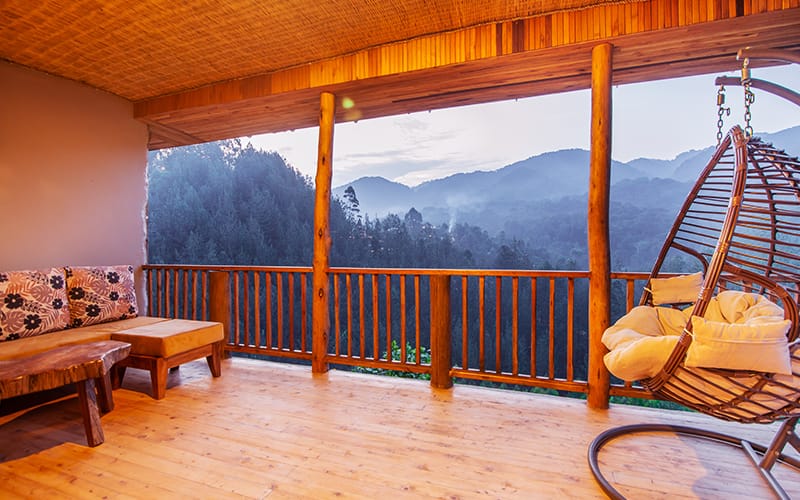
Operated by Volcanoes Safaris, this lodge prioritizes conservation and community development, blending sustainable design with local architectural styles. Features eight luxurious bandas with forest views.
Constructed using sustainable materials and reflecting local architectural styles, it supports conservation efforts and works closely with nearby communities, including partnerships with the Batwa people. The lodge runs the Bwindi Bar, a hospitality training project for local youth. A private footpath into the park offers easy access to trekking. Massage services are available at the Humula Forest Spa.
Nkuringo Bwindi Gorilla Lodge (Nkuringo Sector)
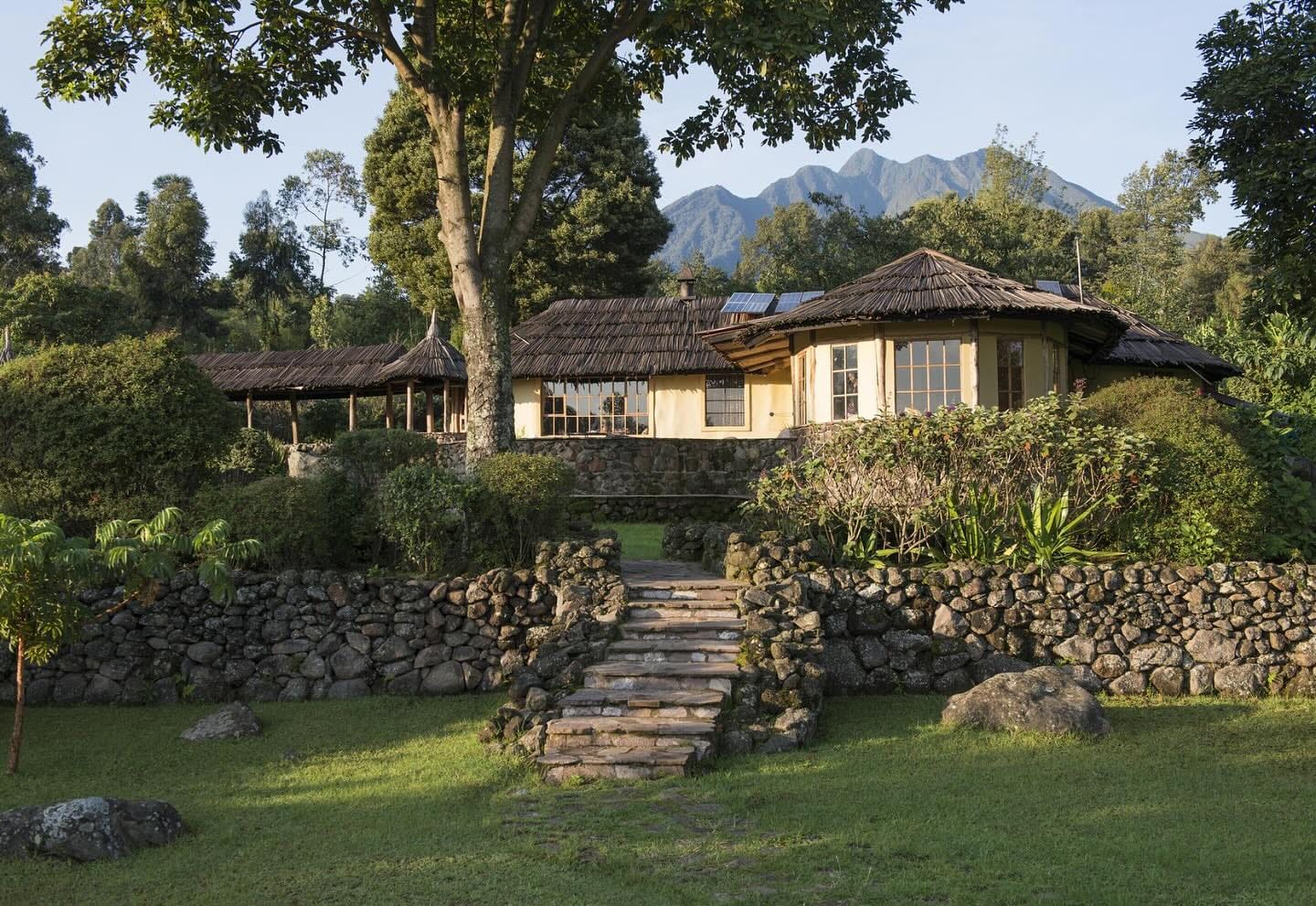
This multi-award-winning eco-lodge is located in the park's southern section, perched on a forested ridge with stunning 360 views of the Virunga Volcano Mountains and Bwindi Forest canopy. Owned and operated by a Ugandan family, it offers private garden cottages, family villas, and luxury suites.
From humble beginnings as a campsite in 2007, it has blossomed into a cherished eco-friendly retreat with a focus on sustainability and carbon neutrality. Solar-powered, uses locally sourced materials, and supports community development. Meals feature local flavors and fresh ingredients. At 2,161 meters in elevation, the crisp mountain air and panoramic views create an unforgettable setting.
Gorilla Leisure Lodge (Rushaga Sector)
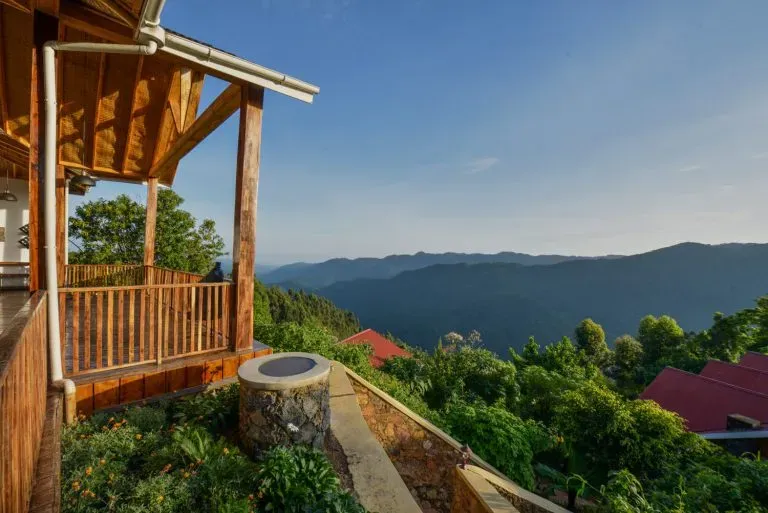
Located in the Rushaga sector with elegant design and breathtaking views of Bwindi Impenetrable Forest, it actively contributes to nature conservation efforts by safeguarding ecosystems.
The restaurant was built using local materials that existed at the lodge's current location when it was still within the park's boundaries, championing local cultures and nature conservation. Committed to reforestation and planting trees to combat climate change. Just minutes from the park gate, offering convenience for trekking. Guests rave about exceptional service, thoughtful touches (hand massages, candlelight dinners), and impeccable cleanliness.
I'm so glad you made it this far. Plan V is an independent magazine, and your donation allows me to continue doing this.
See you soon.
Thank you!
FAQS
How safe is Bwindi Impenetrable National Park?
Bwindi is very safe for visitors, with tourism security as a top priority for both the Ugandan government and local communities. During gorilla trekking, you are accompanied by two well-armed park rangers and tourism police who protect you from potential threats and wildlife.
The government has invested heavily in security measures, including permanent ranger deployment, military coordination at borders, and advanced monitoring systems. Crime in Uganda's parks is extremely rare, and your safety is continuously monitored throughout your visit. Most lodges also maintain their own security personnel for additional guest protection.
How hard is gorilla trekking in Bwindi?
Gorilla trekking in Bwindi is moderately to highly challenging and requires a reasonable level of physical fitness. The trek involves navigating elevations between 1,160 and 2,607 meters, encountering steep slopes, dense vegetation, and potentially muddy grounds.
You'll be walking at altitudes of 2,500-3,000 meters where the air is thinner, placing greater demands on your lungs. The terrain is mountainous, with thick vegetation that requires stamina, balance, and agility. Descending can be just as demanding as ascending, with slippery slopes requiring controlled movement and increasing fall risk.
What is Bwindi Impenetrable famous for?
Bwindi Impenetrable Park is world-renowned as the premier destination for mountain gorilla trekking. The park is home to approximately half of the world's remaining mountain gorilla population, making it the most important sanctuary for this critically endangered species.
UNESCO World Heritage Status: Bwindi was designated a UNESCO World Heritage Site for its exceptional biodiversity. This 25,000-year-old rainforest contains remarkable ecological wealth beyond gorillas, including over 160 tree species, more than 100 fern species, 350+ bird species (with 23 Albertine Rift endemics), and 120 mammal species.
 Pamela Herrera